

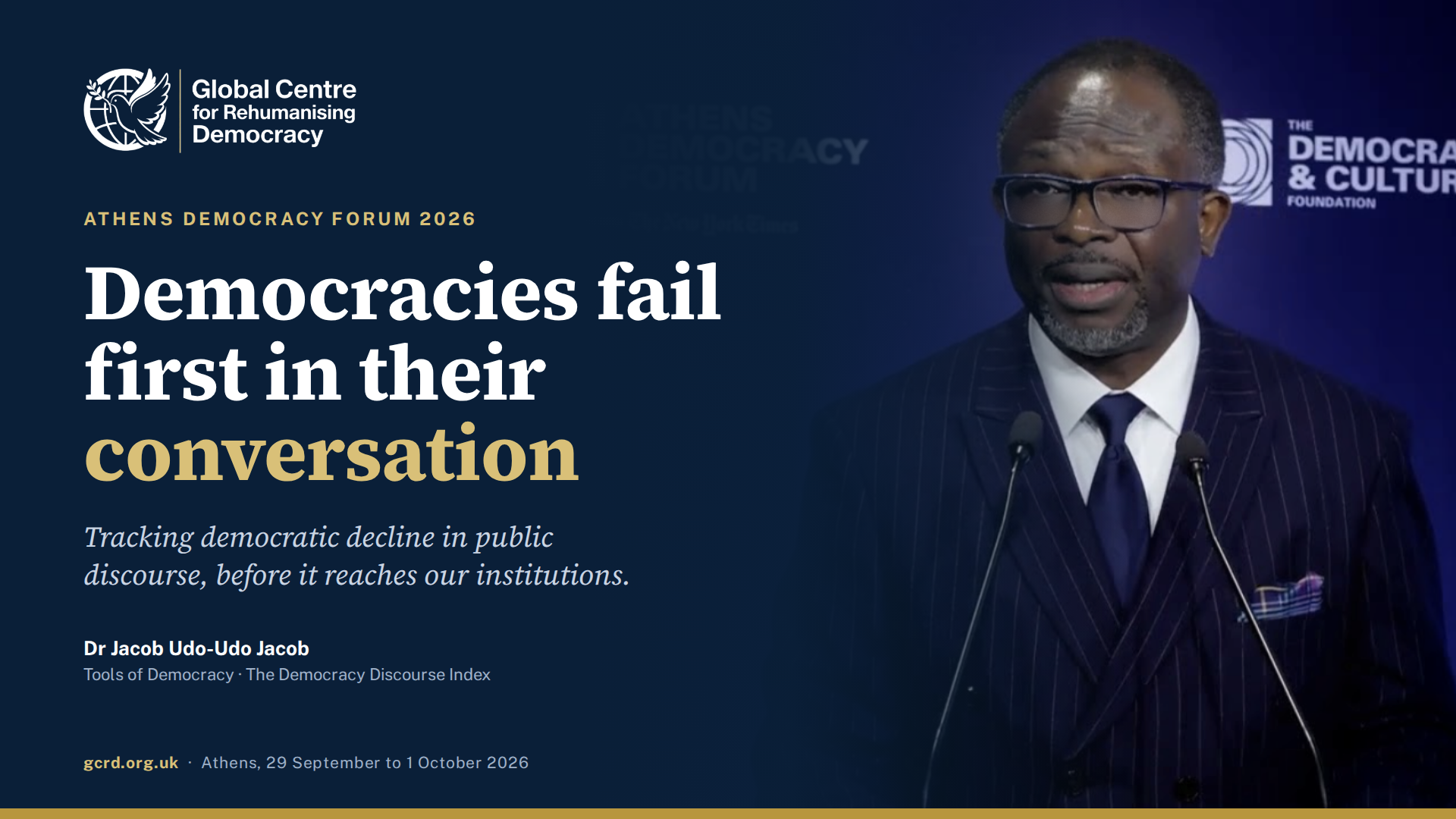
Athens Democracy Forum 2026
Dr Jacob Udo-Udo Jacob, Founding Executive Director of the Global Centre for Rehumanising Democracy, joined democracy leaders from across the world in Athens for the 14th Athens Democracy Forum. Organised by the Democracy & Culture Foundation in association with The New York Times, the Forum brought together more than 400 policymakers, civil society leaders, technologists, academics, artists and young leaders under the theme "Building Order Out of Chaos".
GCRD and UNITAR mark International Day of Democracy with policy dialogue on public discourse and democratic renewal
To mark the International Day of Democracy on 15 September 2026, the Global Centre for Rehumanising Democracy (GCRD), in collaboration with the United Nations Institute for Training and Research (UNITAR), convened a virtual expert policy dialogue on public discourse, democratic health and civic renewal.
A new policy dialogue report sets out ten proposed actions for making democracy a lived experience of dignity, meaningful participation and credible hope.

Rehumanising Democracy: GCRD and UNITAR convene expert dialogue on democratic renewal
The Global Centre for Rehumanising Democracy, in collaboration with the United Nations Institute for Training and Research, will mark the International Day of Democracy 2026 with Rehumanising Democracy: Public Discourse, Democratic Health and Civic Renewal, an online dialogue on Tuesday 15 September, 14:00–15:30 UTC.
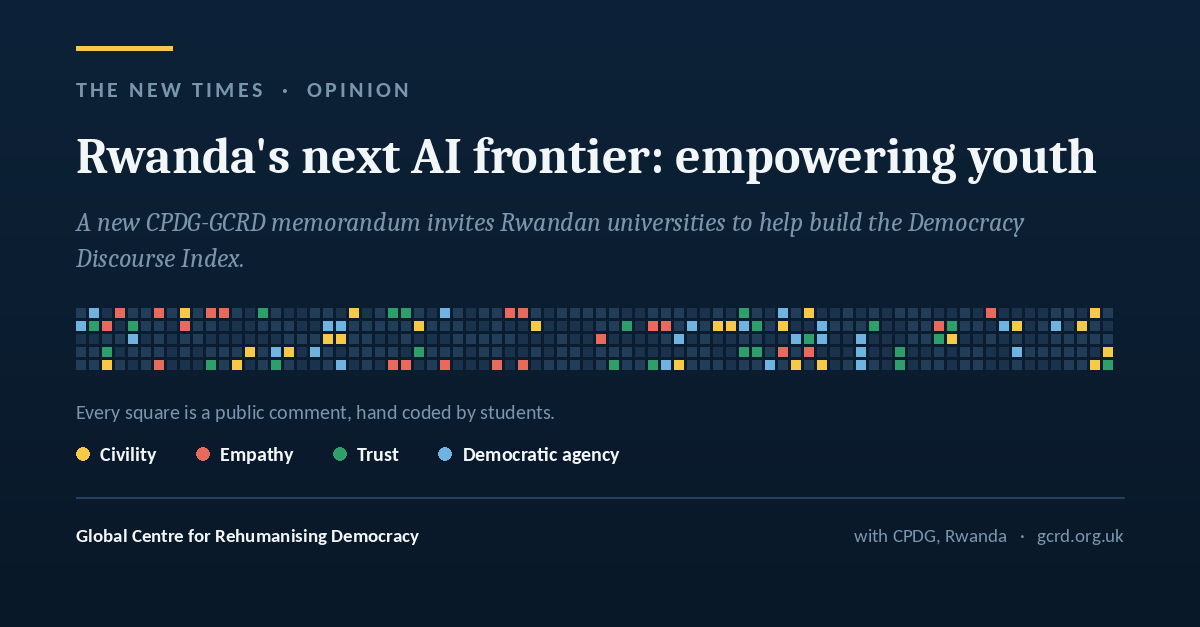
GCRD and CPDG Sign Framework MOU to Advance Democracy, AI and Youth Engagement in Rwanda
The Global Centre for Rehumanising Democracy (GCRD) and Rwanda’s Centre for Peace, Democratic Governance and Development (CPDG) have signed a Framework Memorandum of Understanding establishing a wide-ranging partnership on democratic governance, public discourse, artificial intelligence, peacebuilding and youth engagement.
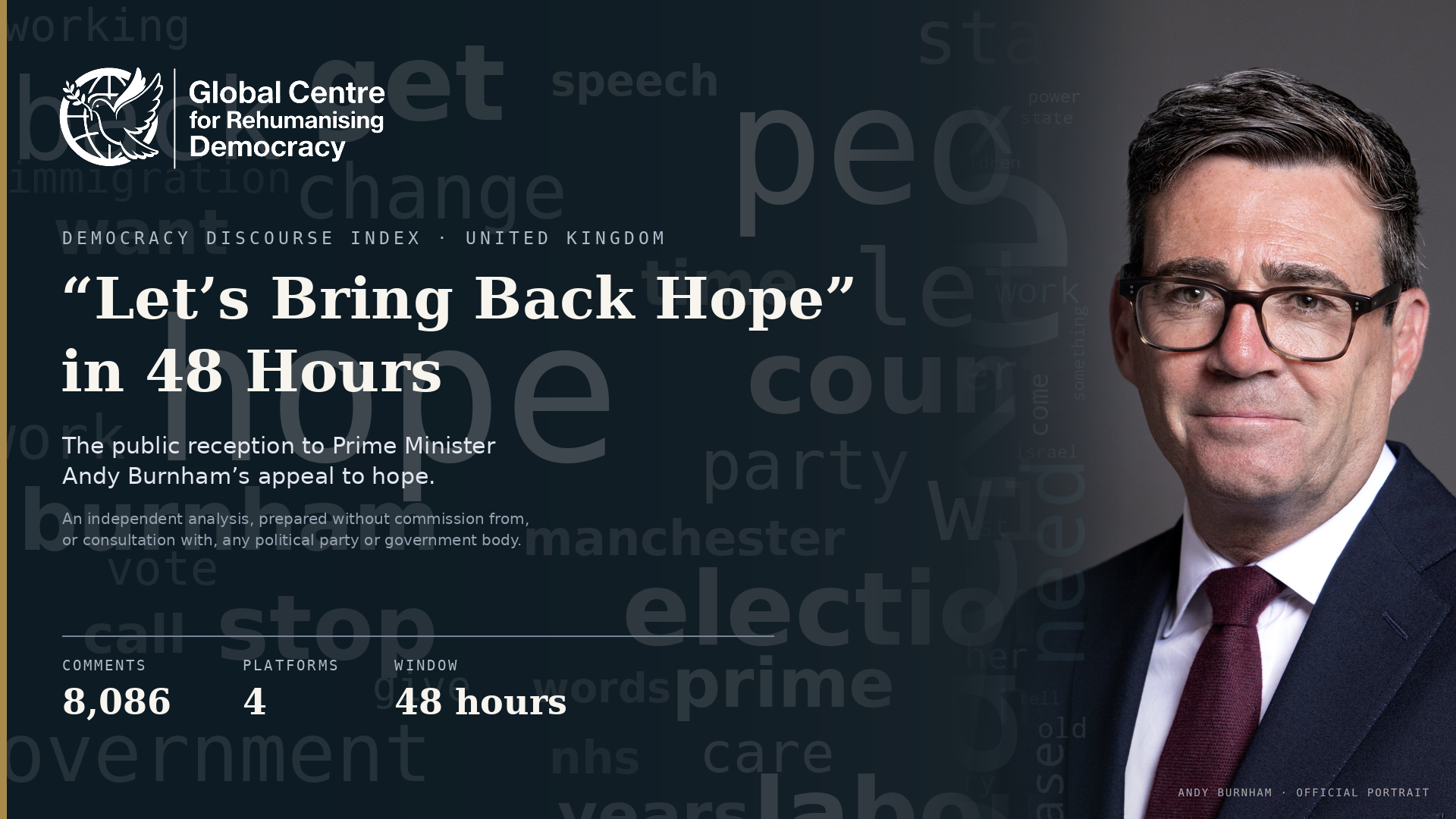
Hope in a Low-Trust Democracy: UK Public Discourse in Response to New PM Andy Burnham
How does hopeful political rhetoric perform in a low-trust democratic environment?
Using the Democracy Discourse Index (DDI), our new study analyses 8,086 public responses to Prime Minister Andy Burnham’s “bring back hope” address across Facebook, X, TikTok and Instagram. The interactive analysis examines variation in stance and discourse quality across four DDI dimensions — empathy, civility, epistemic trust and democratic agency — alongside platform effects, temporal dynamics, lexical patterns and evidence of coordinated advocacy. Explore the findings below.
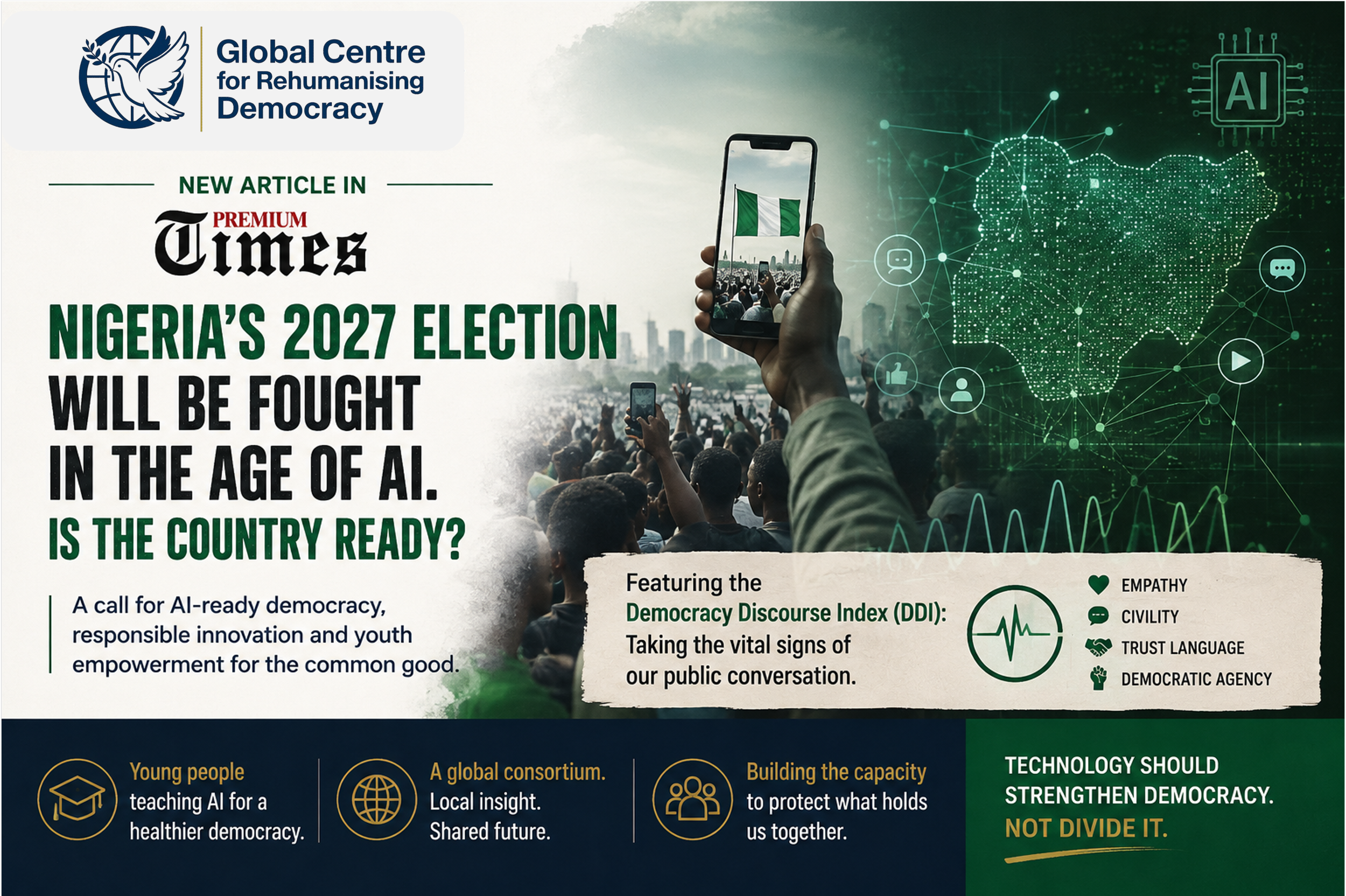
GCRD Leaders Call for AI-Ready Democratic Institutions Ahead of Nigeria’s 2027 Elections
In a new article published by Premium Times Nigeria, GCRD Board Chair Dr. Margee Ensign and Founding Executive Director Dr. Jacob Udo-Udo Jacob argue that Nigeria must prepare not only for the political contest of 2027, but for its first general election of the generative-AI era.
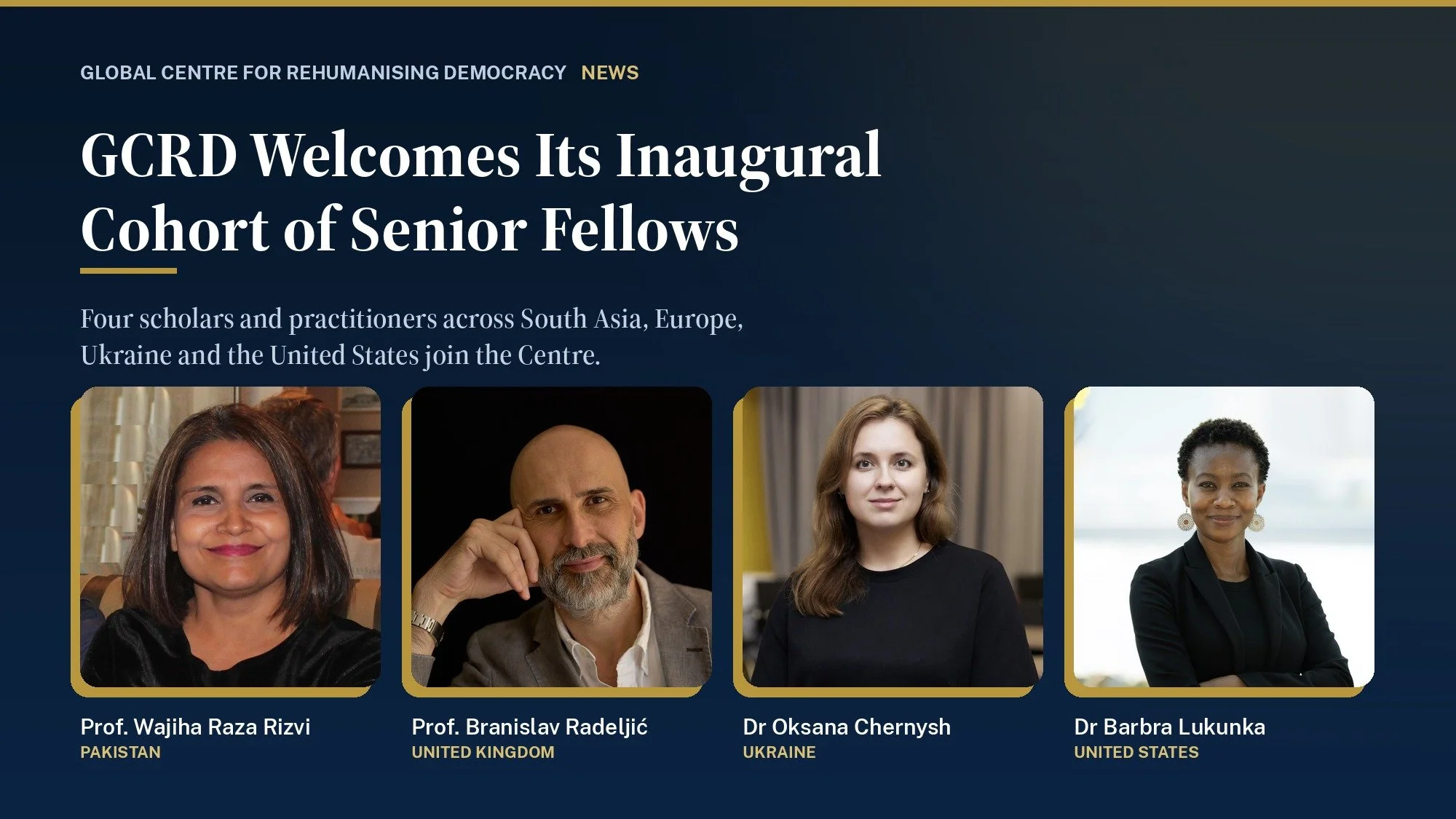
Press Release: GCRD Welcomes Inaugural Fellows
The Global Centre for Rehumanising Democracy has appointed its first cohort of Senior Fellows. The appointments extend the Centre's research capacity across four regions and deepen its work at the relational layer of democracy: the trust, language and moral habits through which citizens, leaders and institutions encounter one another.
The GCRD Senior Fellowship is an active intellectual affiliation where each Fellow develops a focused programme of work with the Centre and contributes to GCRD's research, teaching and public engagement
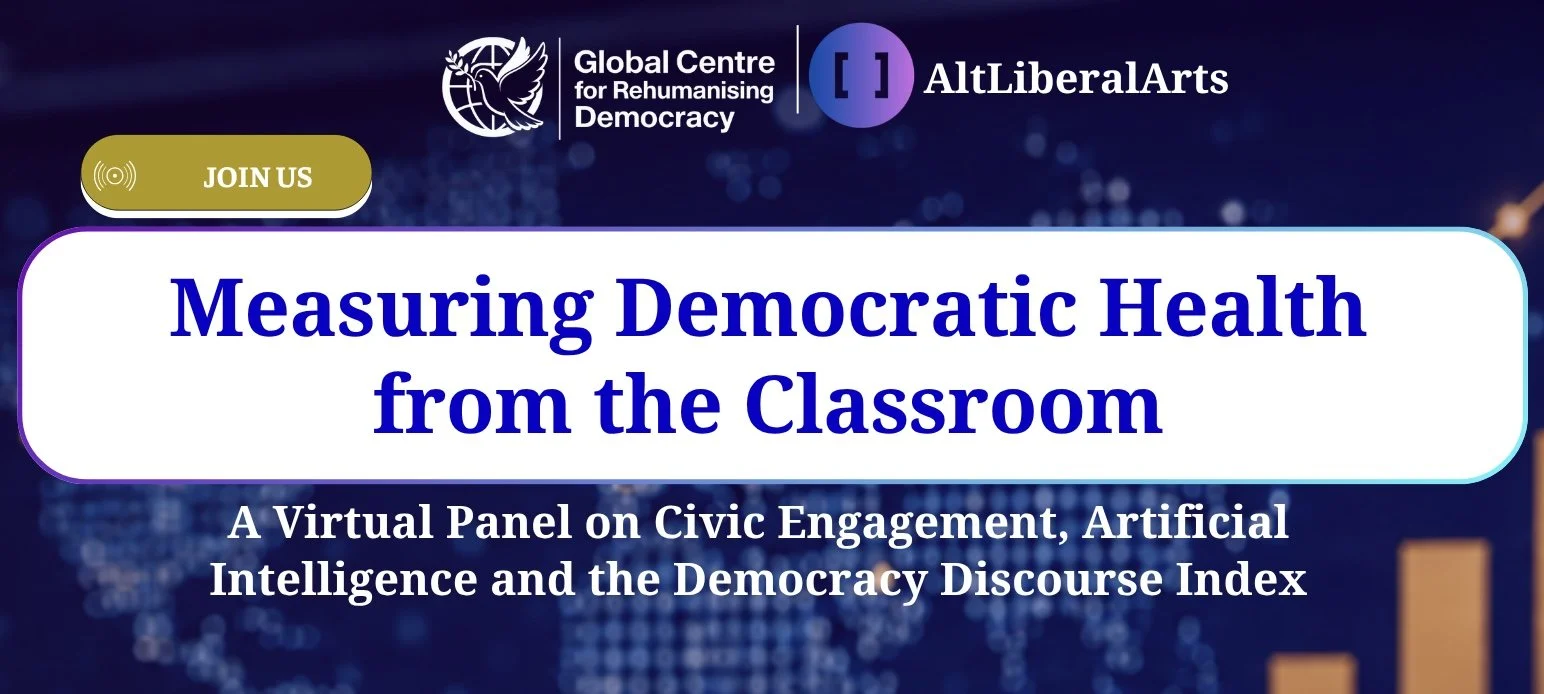
How Students are Building the Ground Truth for a new way to Measure Democracy
GCRD and AltLiberalArts announce a virtual panel on civic engagement, artificial intelligence and the Democracy Discourse Index, featuring faculty and student researchers from Pakistan, Albania, Greece and the United States.
GCRD, UNITAR and Bard College Form Global Partnership to Advance Peacebuilding Education
A new trilateral agreement commits the United Nations Institute for Training and Research, Bard College and the Global Centre for Rehumanising Democracy to a shared programme of peacebuilding education that begins with “We the Peoples.”
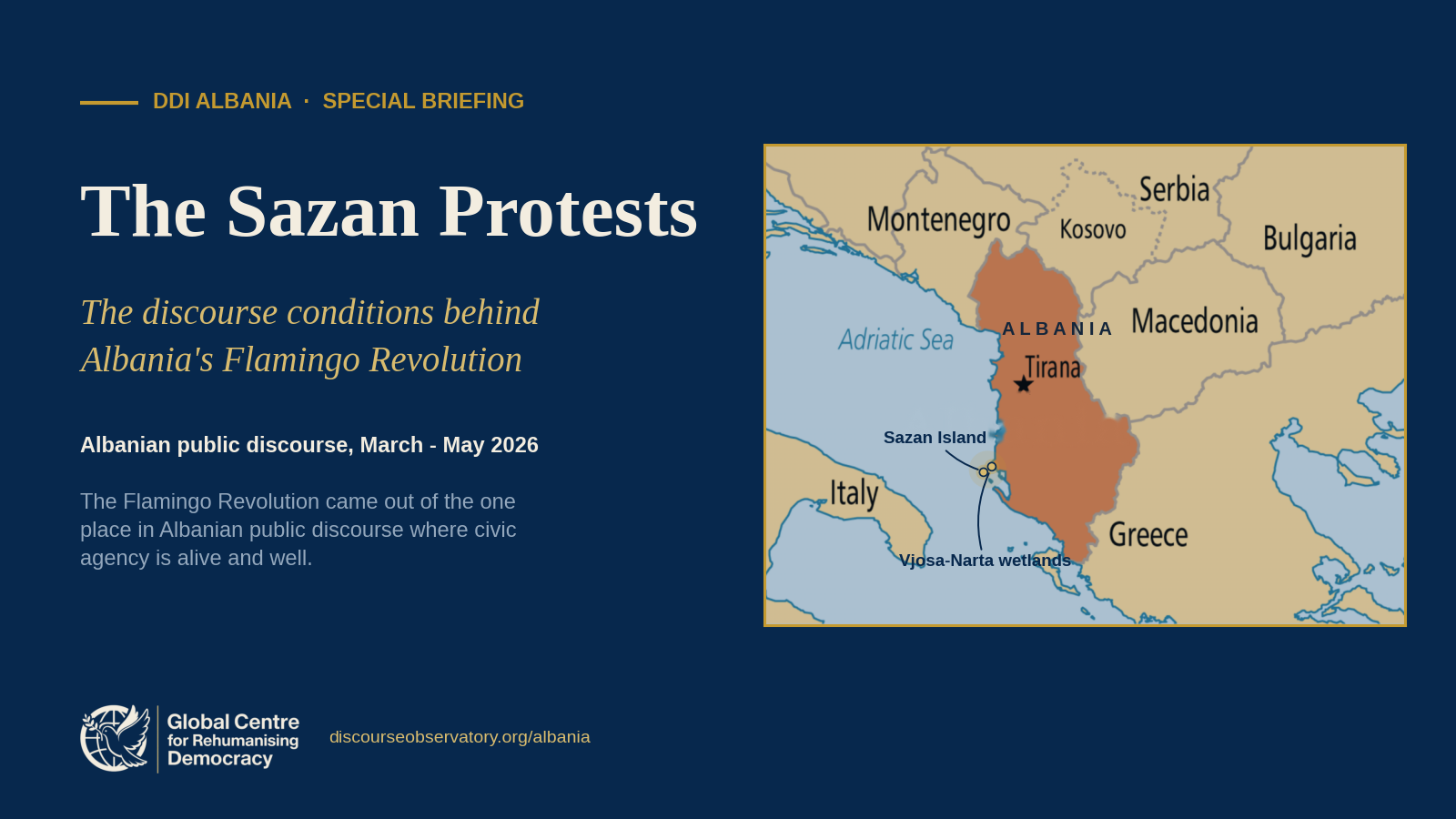
GCRD Publishes Special Briefing on Discourse Conditions Behind Albania's Flamingo Protests
The Global Centre for Rehumanising Democracy (GCRD) has published a special briefing analysing the public discourse conditions that preceded Albania's protests over a planned luxury development on Sazan Island and the Vjosa-Narta wetlands.
The briefing, The Sazan Protests, is based on data from GCRD's Democracy Discourse Index (DDI) observatory in Albania, which analysed social media posts of Albanian public discourse between March and May 2026, in the months before the demonstrations began.
The briefing notes that Albania's national discourse quality composite stood at 41.8 percent over the period, within the index's Concerning band, while the national agency score, which measures the share of discourse in which citizens frame themselves as actors in public life rather than spectators, was 34 percent. Agency fell to 6.7 percent in discourse on social cohesion and 16 percent in discourse on international affairs.
GCRD’s Knowledge Encoder Advances to Prototyping Phase of the Global Trust Challenge
The Global Centre for Rehumanising Democracy (GCRD) has been selected to advance to the Prototyping Phase of the Global Trust Challenge for its submission, The Community Knowledge Encoder: Civic Infrastructure for Trustworthy AI Through Community-Grounded Intelligence.
The Global Trust Challenge was created by a global coalition in response to a G7 call to action to strengthen trust in the digital age. With UNESCO as a founding member, the initiative is led by a coalition including the IEEE Standards Association (IEEE SA), the Organization for Economic Co-operation and Development (OECD), and AI Commons, working alongside a growing international network of experts, institutions, and organizations.
NED University Launches First Internship on Democracy Discourse Index
Karachi, Pakistan | 30 June 2026
The Global Centre for Rehumanising Democracy (GCRD) and NED University of Engineering and Technology, Karachi, today launched a first-of-its-kind joint summer course training university students in the methodology of the Democracy Discourse Index (DDI), a groundbreaking framework for measuring democratic health through the quality of public conversation.
The course marks a significant expansion of the DDI’s reach in Pakistan and deepens a research partnership that has already produced a landmark Observatory pilot study on Pakistani public discourse.
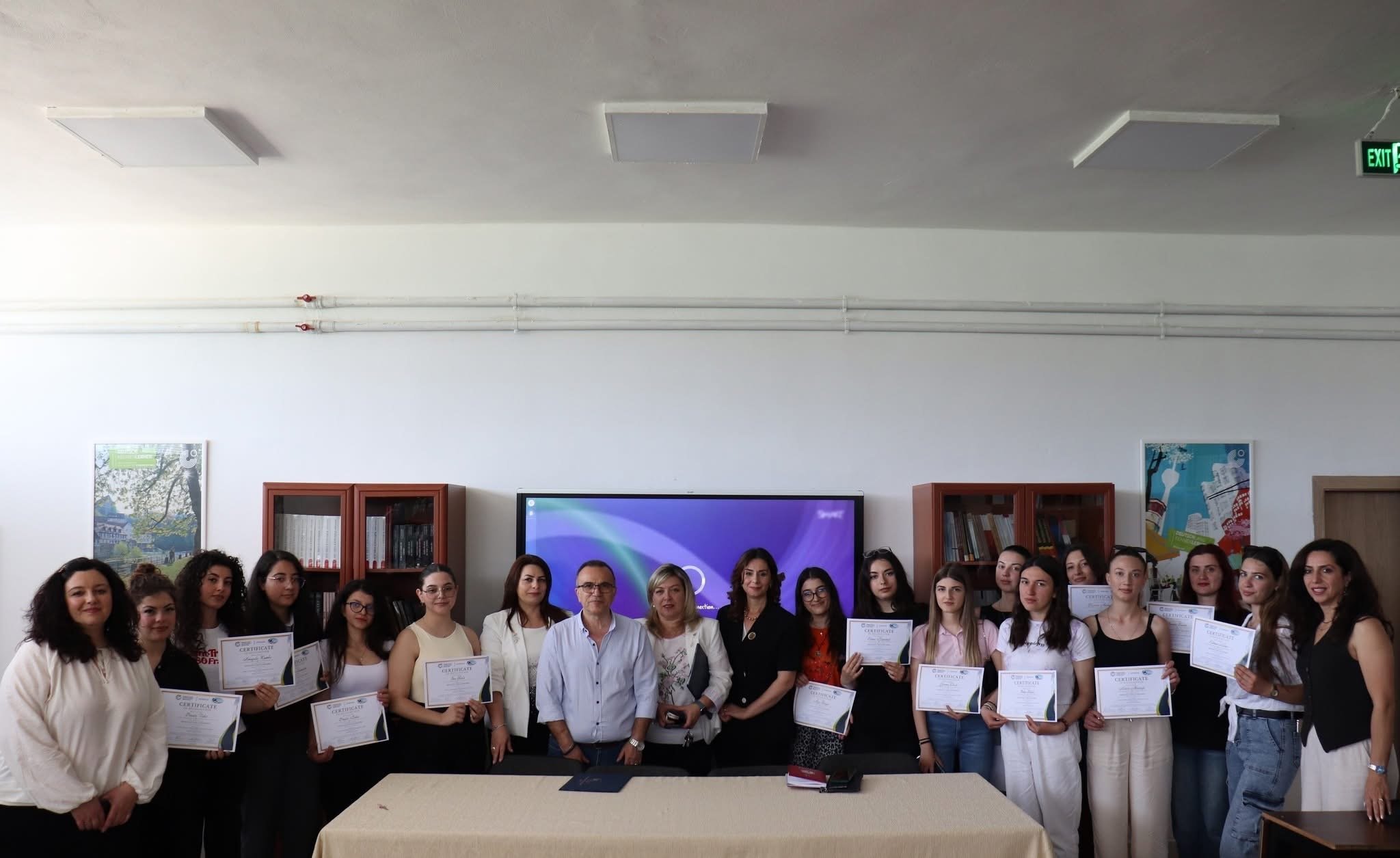
From Korçë to the World: Albanian Students Advance the Democracy Discourse Index
Korçë, Albania — The Faculty of Education and Philology at “Fan S. Noli” University of Korçë (UNIKO) has held a certificate ceremony honouring students who successfully completed Albania’s participation in the international pilot project of the Democracy Discourse Index (DDI), implemented between February and May 2026.

University of Korçë Honours Students for Contributing to Democracy Discourse Index
Fifteen undergraduate and postgraduate students from the University of Korçë “Fan S. Noli” will be recognised on Tuesday, 2 June, for their contribution to a pioneering international research initiative examining the quality of democratic discourse in the digital age.
The students participated in the Democracy Discourse Index (DDI), an innovative project led by the Global Centre for Rehumanising Democracy (GCRD) in partnership with Sensika Technologies. Over five months, they analysed more than 1,000 social media posts, coding patterns of empathy, civility, trust language, and democratic agency as part of a global effort to better understand the moral and informational health of democracy.
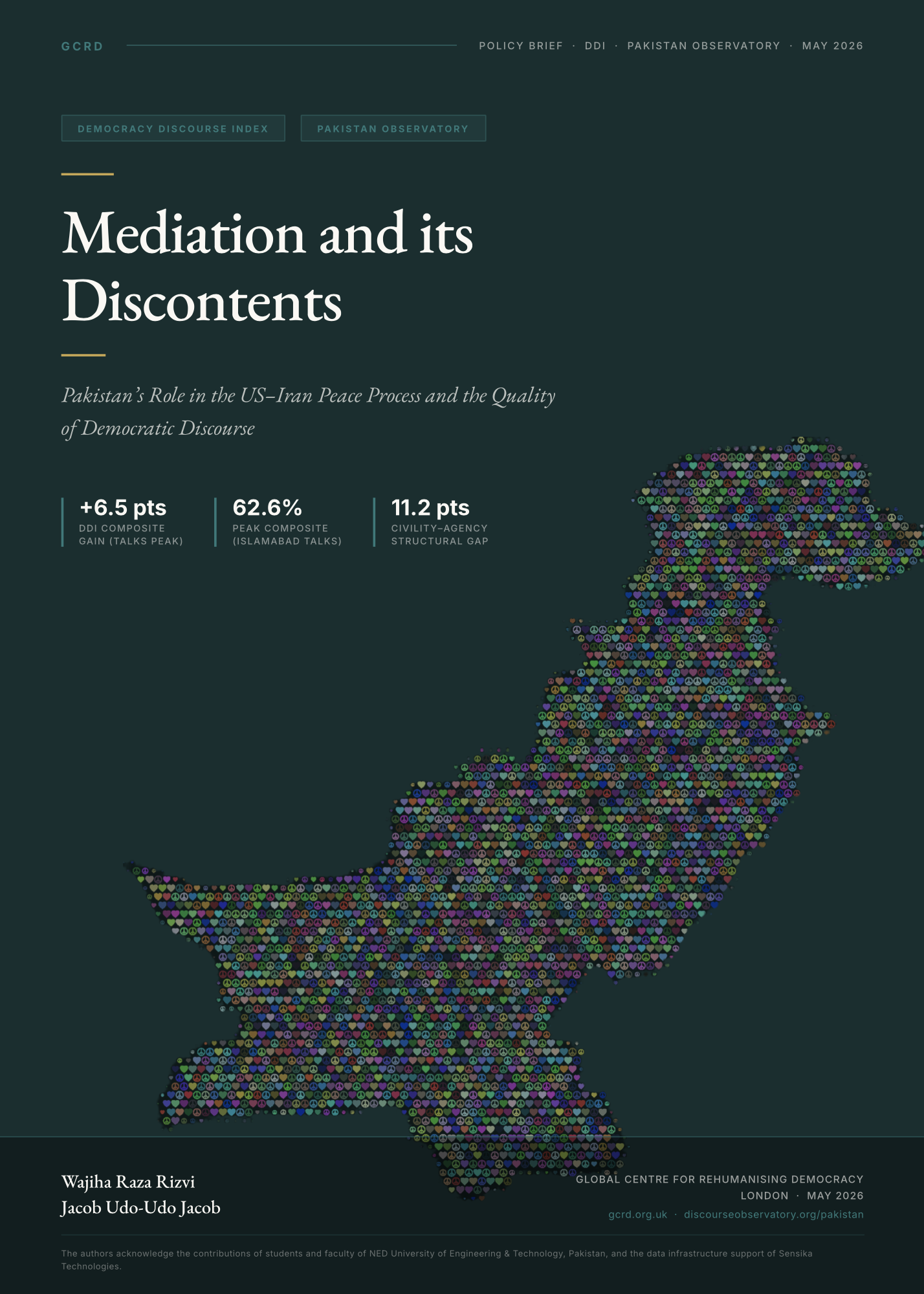
Mediation and its Discontents: A New GCRD Policy Brief Tracks Public Discourse during Pakistan's Mediation of US-Iran War
Between March and May 2026, Pakistan assumed a diplomatic role without modern precedent: mediating between the United States, Iran, and their regional allies at a moment of acute international danger. Islamabad hosted a quadrilateral summit, facilitated direct US–Iran negotiations, and kept back-channel contact alive even when talks threatened to unravel. By any standard, it was Pakistan's most consequential foreign-policy moment in a decade.
A new policy brief from GCRD reports findings from a DDI Pakistan tracking of public discourse on X across the full seven-week arc of Pakistan's mediation.
Building Democratic Resilience: NED University Students Honoured for DDI Research
What does it mean to study democracy seriously in the digital age?
At NED University of Engineering & Technology in Pakistan, it meant students spending months analysing more than 3,000 online posts, coding language patterns related to empathy, civility, trust, polarisation, and civic agency as part of the Democracy Discourse Index (DDI), a pioneering international initiative led by the GCRD and Sensika Technologies.
Guided by their professor, Dr. Wajiha Raza Rizvi and a small research team, and supported by the Department of English Linguistics & Allied Studies, these students became part of a founding consortium of only seven universities worldwide helping train the world’s first real-time democratic discourse measurement system. Their work was not simulated classroom activity. It was live international research contributing directly to the development of AI models capable of identifying early warning signals of democratic deterioration and social fragmentation months before institutional crises become fully visible.

GCRD Board Advances Strategy, Partnerships, and Global Impact
The Board of Trustees of the Global Centre for Rehumanising Democracy (GCRD) convened on April 29, 2026 to review the organisation’s strategic direction and advance key priorities across governance, partnerships, and programme development.
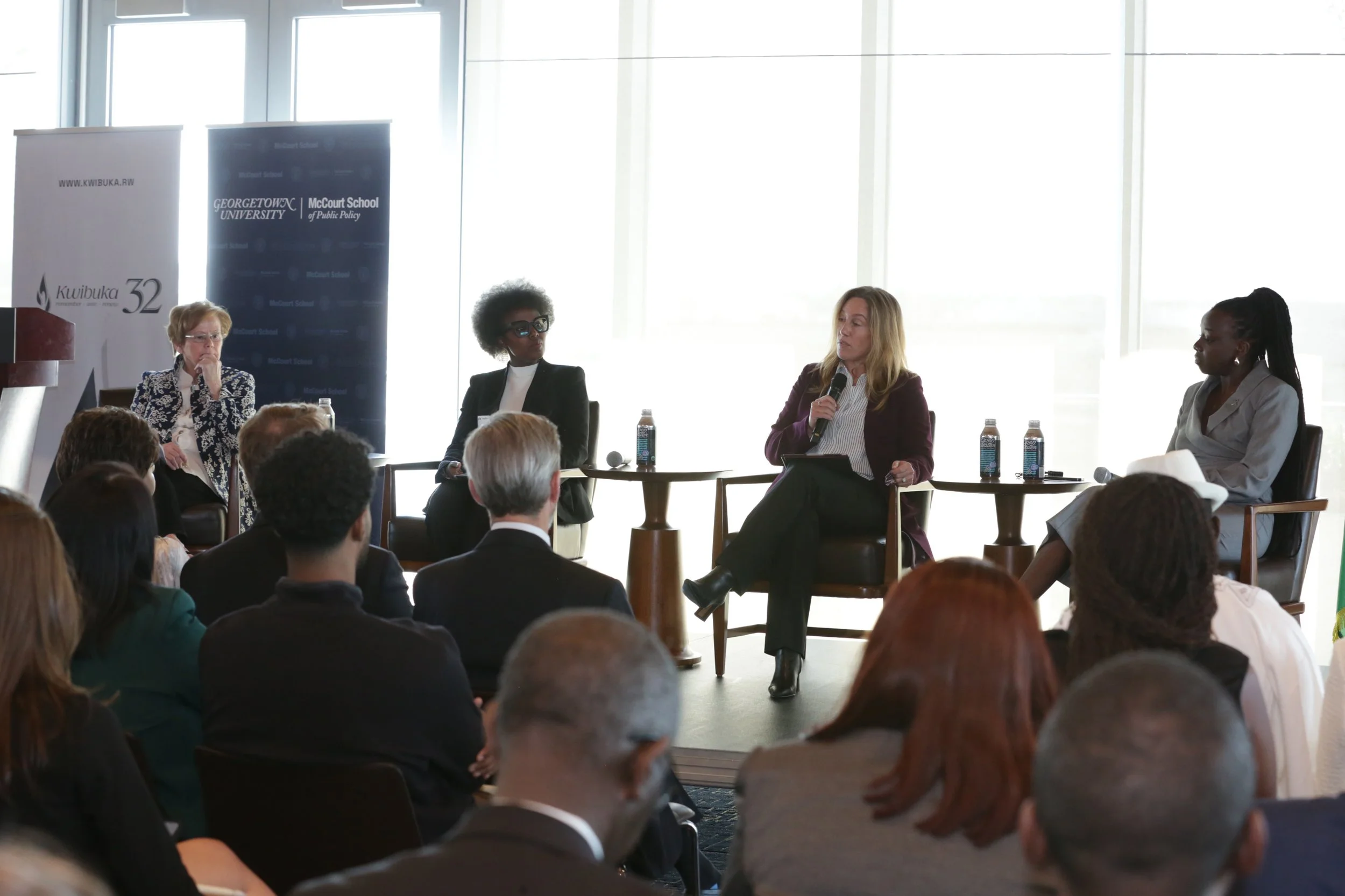
GCRD Board Chair Joins Scholars and Diplomats at National Kwibuka 32 Commemoration in Washington DC
Dr. Margee Ensign, one of the first foreign scholars to investigate the 1994 Genocide against the Tutsi on the ground in Rwanda and a leading authority on the subject for over three decades, was a featured panellist at the national Kwibuka 32 commemoration held April 7 in Washington, D.C. The event, co-hosted by the Embassy of Rwanda and Georgetown University's McCourt School of Public Policy, brought together diplomats, U.S. government officials, survivors, and academics to mark thirty-two years since the genocide. Dr. Ensign, Board Chair of GCRD, joined the panel discussion on rebuilding societies after mass atrocity.
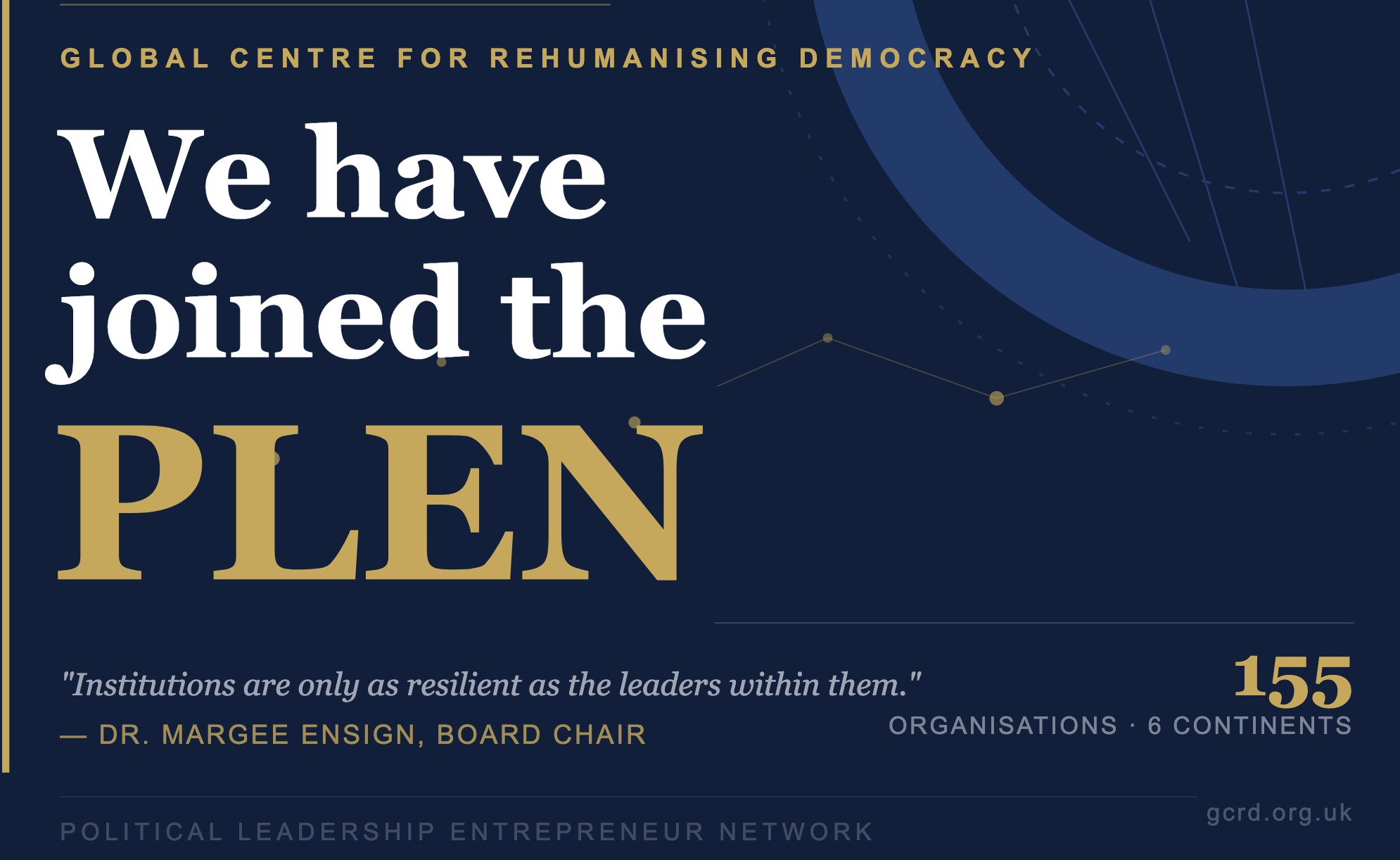
GCRD Joins Global Network to Strengthen Democratic Leadership
The Global Centre for Rehumanising Democracy (GCRD) has joined the Political Leadership Entrepreneur Network (PLEN), a global community of over 150 non-partisan organisations innovating approaches to political leadership across every region of the world. The PLEN is convened by the Better Politics Foundation, a Berlin-based organisation whose mission is to build better leaders for better democracies.
GCRD Completes Landmark Lecture Series on AI, Manipulation, and Democratic Survival
Across three sessions in February 2026, GCRD Founding Executive Director Dr. Jacob delivered a lecture series titled Democracy, AI, and the Freedom to Learn: A Survival Curriculum for the 21st Century. Sponsored by AltLiberalArts, the series introduced the concept of AI-Enhanced Reflexive Control (AIRC) and traced its implications for liberal arts education, academic freedom, and democratic resilience.