

GCRD Board Chair Joins Scholars and Diplomats at National Kwibuka 32 Commemoration in Washington DC
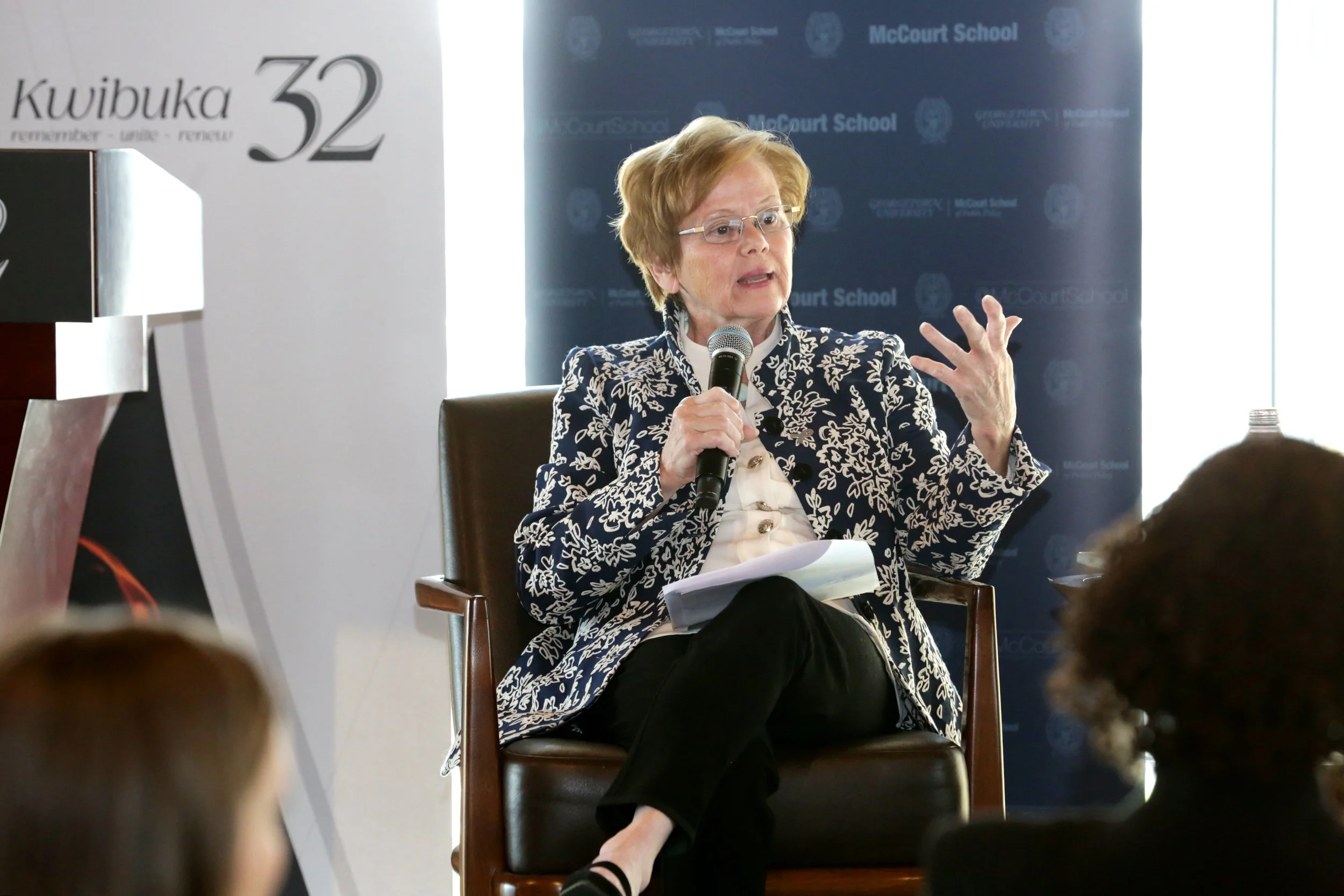
Pictured: Dr Margee Ensign. Photo Credit: Embassy of Rwanda in Washington DC
Dr. Margee Ensign, one of the first foreign scholars to investigate the 1994 Genocide against the Tutsi on the ground in Rwanda and a leading authority on the subject for over three decades, was a featured panellist at the national Kwibuka 32 commemoration held April 7 in Washington, D.C. The event, co-hosted by the Embassy of Rwanda and Georgetown University's McCourt School of Public Policy, brought together diplomats, U.S. government officials, survivors, and academics to mark thirty-two years since the genocide.
Dr. Ensign, Board Chair of GCRD, joined the panel discussion on rebuilding societies after mass atrocity — bringing with her more than thirty years of unbroken scholarly engagement with the 1994 Genocide against the Tutsi, including the distinction of being among the very first foreign researchers to travel to Rwanda and investigate the genocide as its full horror was being uncovered. Few people anywhere in the world have studied this subject as long, or with as much rigour and personal commitment.
The commemoration which was part of a nationwide wave of Kwibuka 32 events, brought together members of the diplomatic corps, U.S. government officials, survivors, academics, and the Rwandan community to mark thirty-two years since April 1994.
“In the 32 years since the Genocide against the Tutsi, Rwanda has undertaken a path that is, by any historical measure, extraordinary — restoring security, rebuilding institutions, and fostering a national identity that rejects the divisions which made such violence possible.”
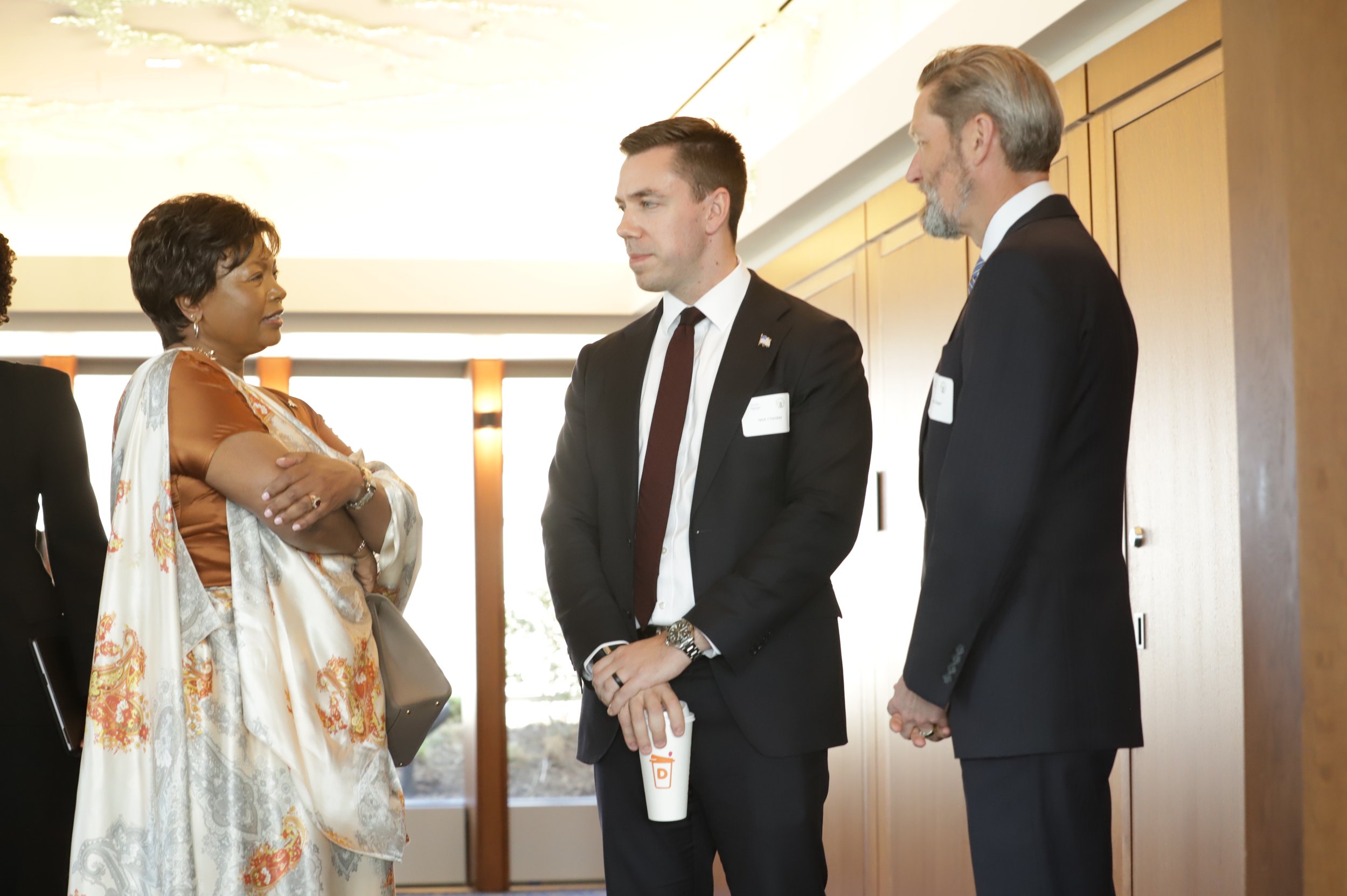
Pictured: Ambassador Mathilde Mukantabana, Senior Bureau Official Nick Checker, and Keith Gilges from the U.S. State Department. Photo Credit: Embassy of Rwanda in Washington DC
A Day of Testimony and Commitment
The commemoration opened with a keynote address by Rwanda's Minister Hon. Nelly Mukazayire, who offered personal testimony and reflected on Rwanda's remarkable recovery — a transformation she attributed in significant part to principled and determined national leadership. Her words set a tone that balanced grief with the hard-won evidence of what healing, accountability, and unity can achieve.
Speakers from across institutional life underscored the enduring importance of the day. Nick Checker, Senior Bureau Official for African Affairs at the U.S. Department of State, spoke alongside colleague Keith Gilges and acknowledged Rwanda's extraordinary post-genocide trajectory. Dr. Favorite Iradukunda, Vice President of Ibuka USA — the organisation representing genocide survivors — brought a survivor community perspective to the imperative of confronting denial wherever it arises. Dean Carole Gresenz of the McCourt School of Public Policy emphasised the university's and the academic community's collective responsibility in sustaining memory and informing policy on genocide prevention.
Panel Discussion: Beyond Genocide
The centrepiece of the afternoon was the panel discussion titled "Beyond Genocide: Overcoming Structural Differences and Rebuilding a Cohesive Society" — and it was here that Dr. Ensign's contribution was most directly felt. Seated alongside Dr. Sara Brown and Dr. Favorite Iradukunda, she brought a depth of historical perspective that few scholars in the world can match. Her engagement with Rwanda began in the immediate aftermath of the genocide, when she was among the very first foreign researchers to enter the country and document what had taken place. That foundation — of early, unblinking witness — has informed thirty years of scholarship, teaching, and advocacy that followed.
The discussion examined what it means — in practice, not in abstraction — to rebuild a society after mass atrocity. Drawing on comparative research, survivor testimony, and policy analysis, the panellists explored how structural inequalities, if left unaddressed, continue to fracture societies long after the violence ends. Three pillars of long-term cohesion emerged from the conversation: confronting the institutional conditions that made violence possible; building inclusive structures that serve every member of society equally; and cultivating a shared national identity grounded not in forgetting, but in honest reckoning.
It is the kind of analysis that requires both the courage to look directly at what happened and the scholarly discipline to draw lessons from it. Dr. Ensign has spent her career doing exactly that — and her voice at Kwibuka 32 embodied both the mission of this commemoration and the work of GCRD.
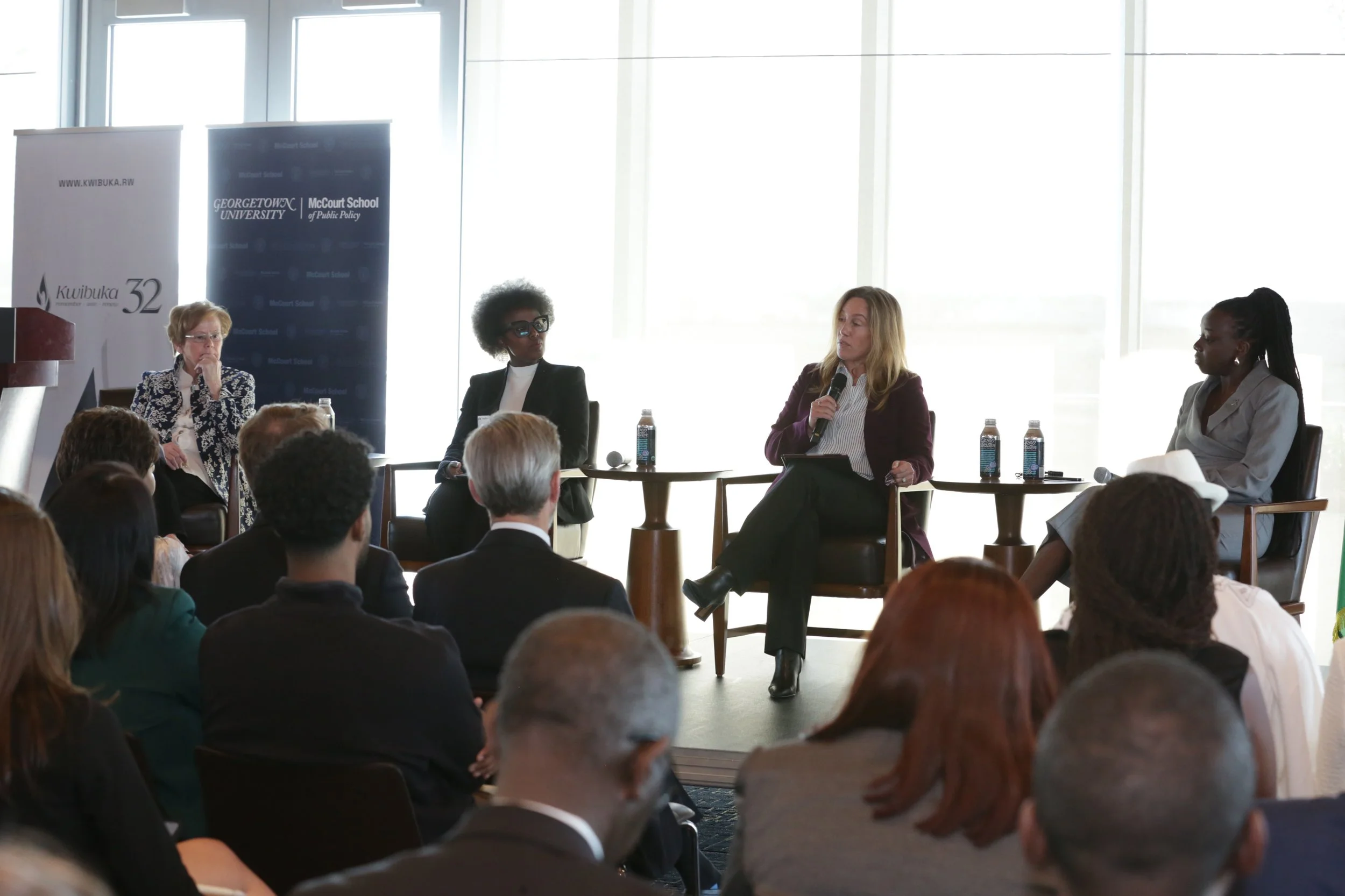
Pictured (L–R): Dr. Margee Ensign, Dr. Favorite Iradukunda, Dr. Sara Brown, and Sandrine Irankunda during the panel "Beyond Genocide: Overcoming Structural Differences and Rebuilding a Cohesive Society." Photo Credit: Embassy of Rwanda in Washington DC
A National Wave of Remembrance
The Washington event was one node in a nationwide network of Kwibuka 32 commemorations. Rwandan communities across the United States have gathered this month in Ohio, Southern California, South Dakota, and Iowa. Ambassador Mathilde Mukantabana has joined commemorations in multiple cities, reflecting the depth of the Rwandan diaspora's commitment to memory and solidarity.
Kwibuka — the Kinyarwanda word meaning "to remember" — calls the world annually to three commitments: to remember those who were killed, to unite across difference, and to renew the collective vow of never again. Thirty-two years after April 1994, the Washington commemoration demonstrated that these are not merely ceremonial words, but living obligations that demand ongoing scholarship, advocacy, and witness.
Watch the full panel discussion: Beyond Genocide: Overcoming Structural Differences and Rebuilding a Cohesive Society
