Event Brief: GCRD-UNITAR Policy Dialogue
How can democracy become a lived experience of dignity, meaningful participation and credible hope? This report draws on the GCRD–UNITAR policy dialogue marking the International Day of Democracy, bringing together academic research and practitioner experience to examine public discourse as a foundation of democratic health. Evidence from Bulgaria, Pakistan and the United Kingdom, presented through the Democracy Discourse Index, shows why improvements in civility and trust must be accompanied by meaningful opportunities for citizens to influence decisions. Contributors explore the roles of universities, civic learning, genuine listening and accountable institutions in democratic renewal, while emphasising whose voices are heard and who remains excluded. The report offers policy insights and ten proposed actions for governments, multilateral institutions, universities and civil society.
International Day of Democracy 2026
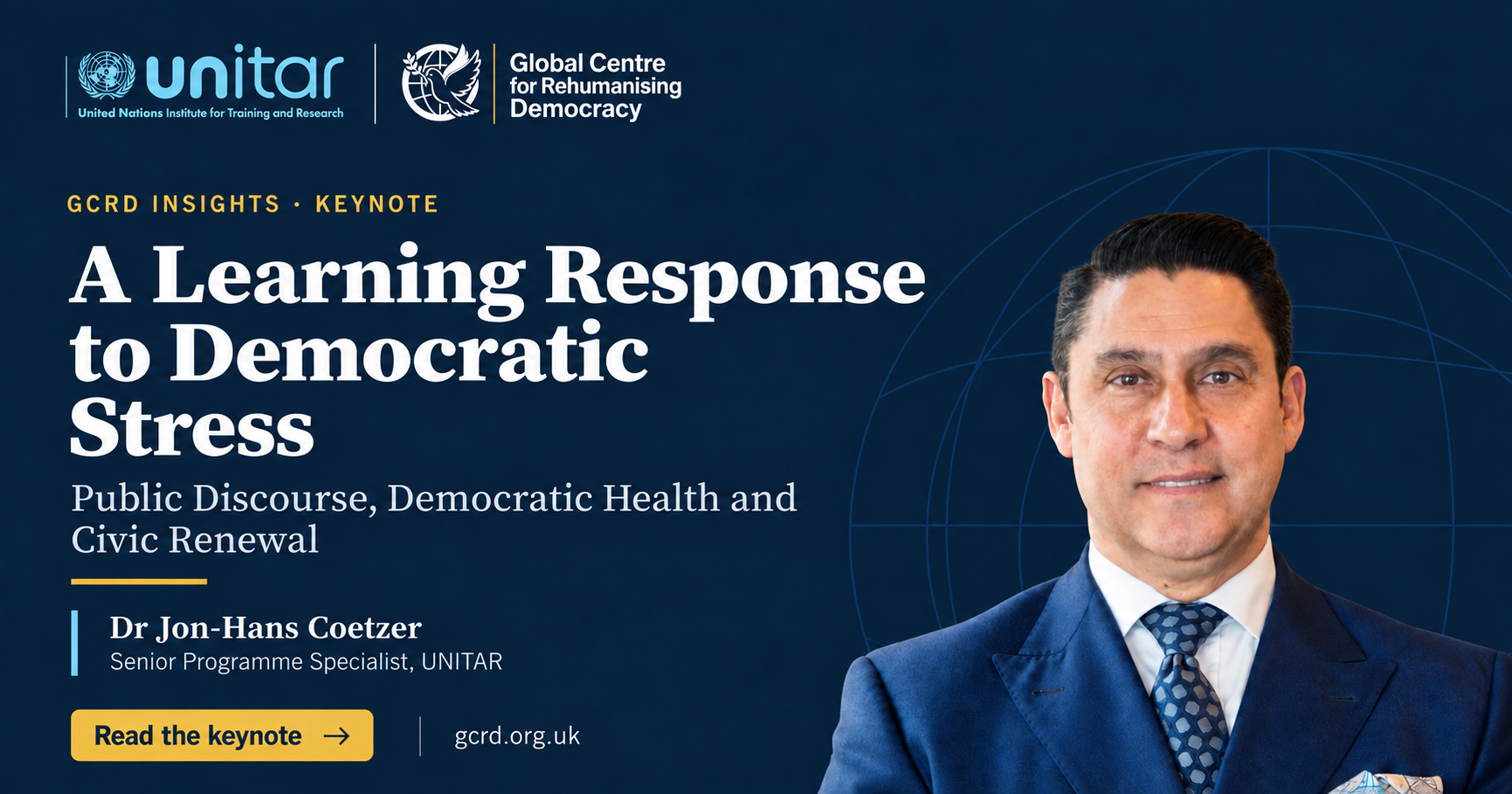
How can democracies recognise stress early and respond before it deepens? Dr Jon-Hans Coetzer of UNITAR makes the case for a learning response grounded in four vital signs of public discourse: empathy, civility, trust and democratic agency. He explores how education, institutional accountability and sustained civic learning can strengthen democratic health, moving beyond crisis management towards the capacities people and institutions need for democratic renewal.
Measuring Democratic Health from the Classroom
Faculty and student researchers from Pakistan, Albania, Greece, and the United States discuss what studying democracy looks like when students are also involved in measuring it.
Academia 2.0: Time for Recalibration?
The current wave of staff redundancies in UK higher education is usually framed as a budgetary problem: a frozen fee, volatile international recruitment, rising costs. This article argues that the redundancies are better read as a symptom of a sector that substituted expansion for mission, and that severance is consequently governed by financial expediency rather than institutional purpose.
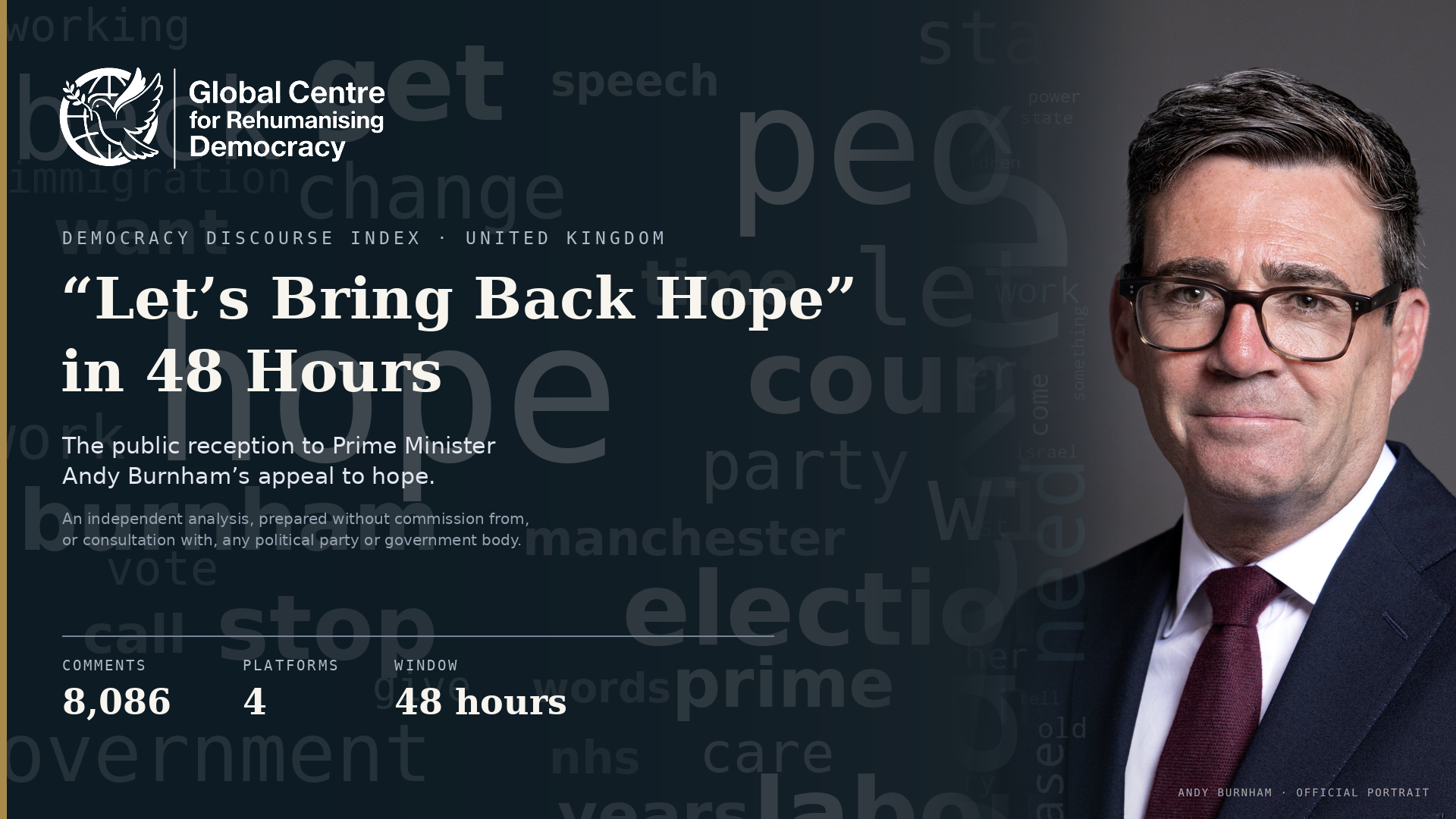
“Let’s Bring Back Hope” in 48 Hours
Hopelessness is no longer a mood at the margins of public life. It has become a critical democratic vulnerability, because a citizen who believes the future holds nothing that has not already been tried and failed cannot be reached by evidence not yet seen.
That is why the Prime Minister Andy Burnham's flagship message, "let's bring back hope," matters.
This report measures what happened when that appeal met the country in its first 48 hours. It analyses 8,086 public responses across four platforms against twenty indicators of discourse quality, and finds that the difficulty lies less in the message than in the ground on which it landed.
We publish it as a beginning rather than a verdict. Through the Democracy Discourse Index, we will continue to monitor public discourse in the UK in response to the Prime Minister's appeal, and we will report what we find.
“Let’s Bring Back Hope”: An Interactive Discourse Map
An interactive Democracy Discourse Index analysis of how the British public received Prime Minister Andy Burnham's inaugural appeal to "bring back hope". We analysed 8,086 public comments across four platforms, coded against 20 behavioural indicators and mapped as co-occurrence networks. We found a reception averaging 15.8 out of 100, a message whose own keyword was used 3.6 times more often to reject it than to embrace it, and a vocabulary of grievance that rotates its target while holding its volume — with the one remaining opening sitting in the conditional fifth of the audience.
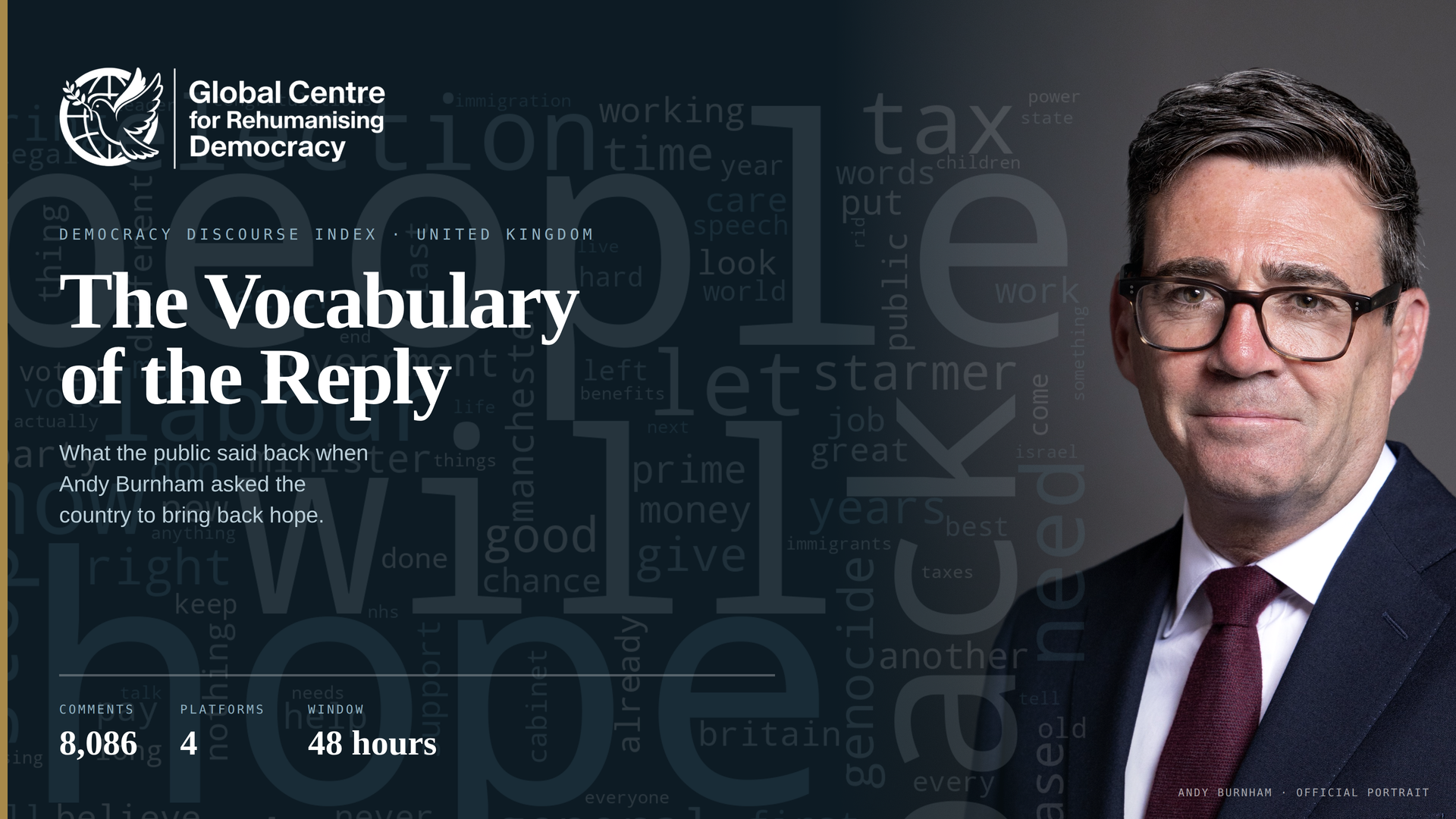
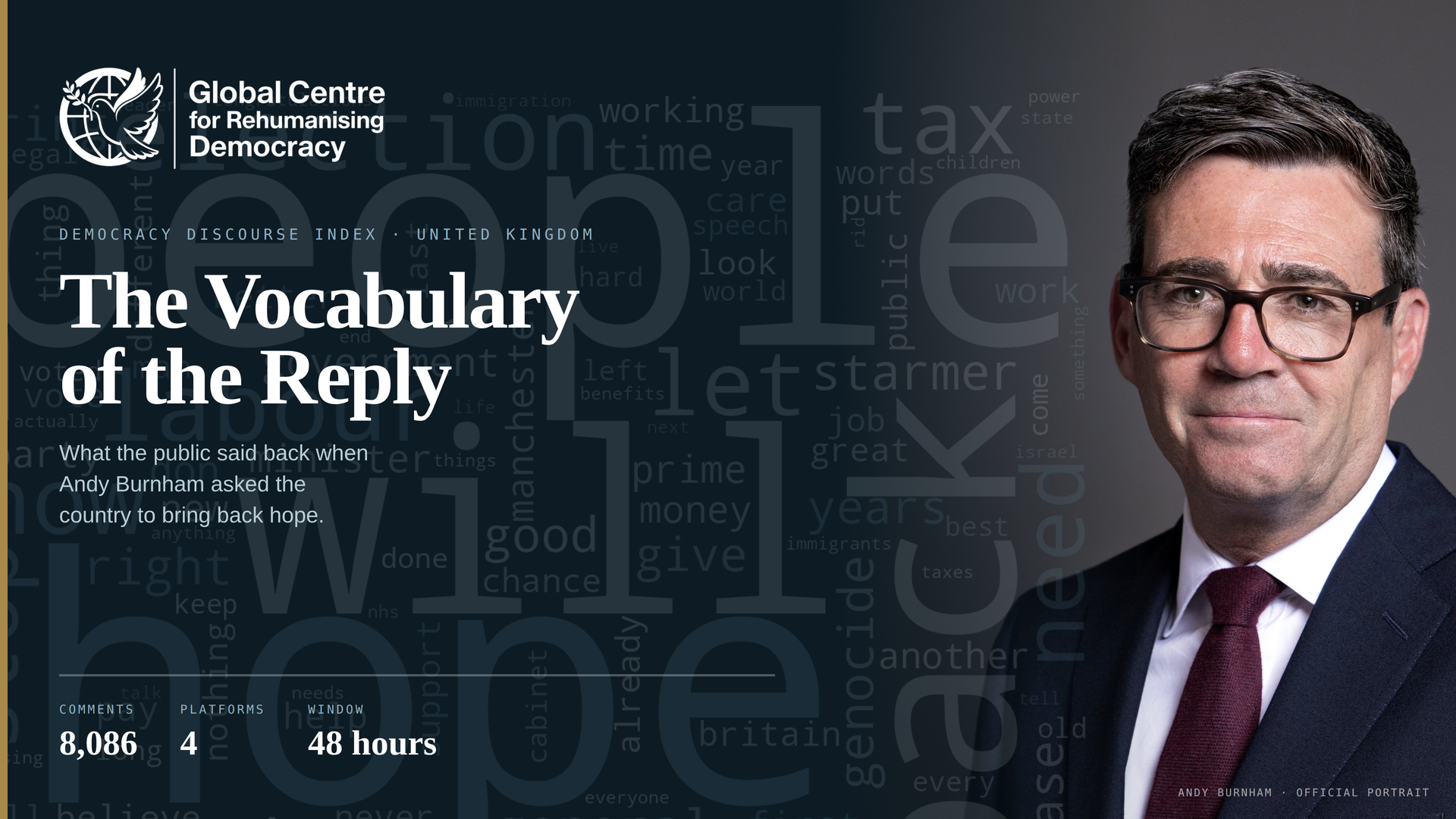
“Let’s Bring Back Hope”: The Lexical Appendix
When Andy Burnham asked the country to bring back hope, we listened to what came back.
8,086 comments. Four platforms. The first 48 hours.
"Hope" was the most common word in the reply. It was also the word most often thrown back. And the most common phrase in a corpus answering an appeal for hope was not hope at all. It was "general election."
The document below shows what each platform, and each stance toward the appeal, actually sounded like. One finding stayed with me. Of 8,086 comments, only 138 rose above the Concerning threshold on the Democracy Discourse Index, and almost none of them were abstract. They arrived attached to a hospital discharge, a carer, a named street. Where public discourse rises toward health, it rises through particularity.
This is the lexical appendix. Watch out for the full report.
Sports, Protests, & Democracy
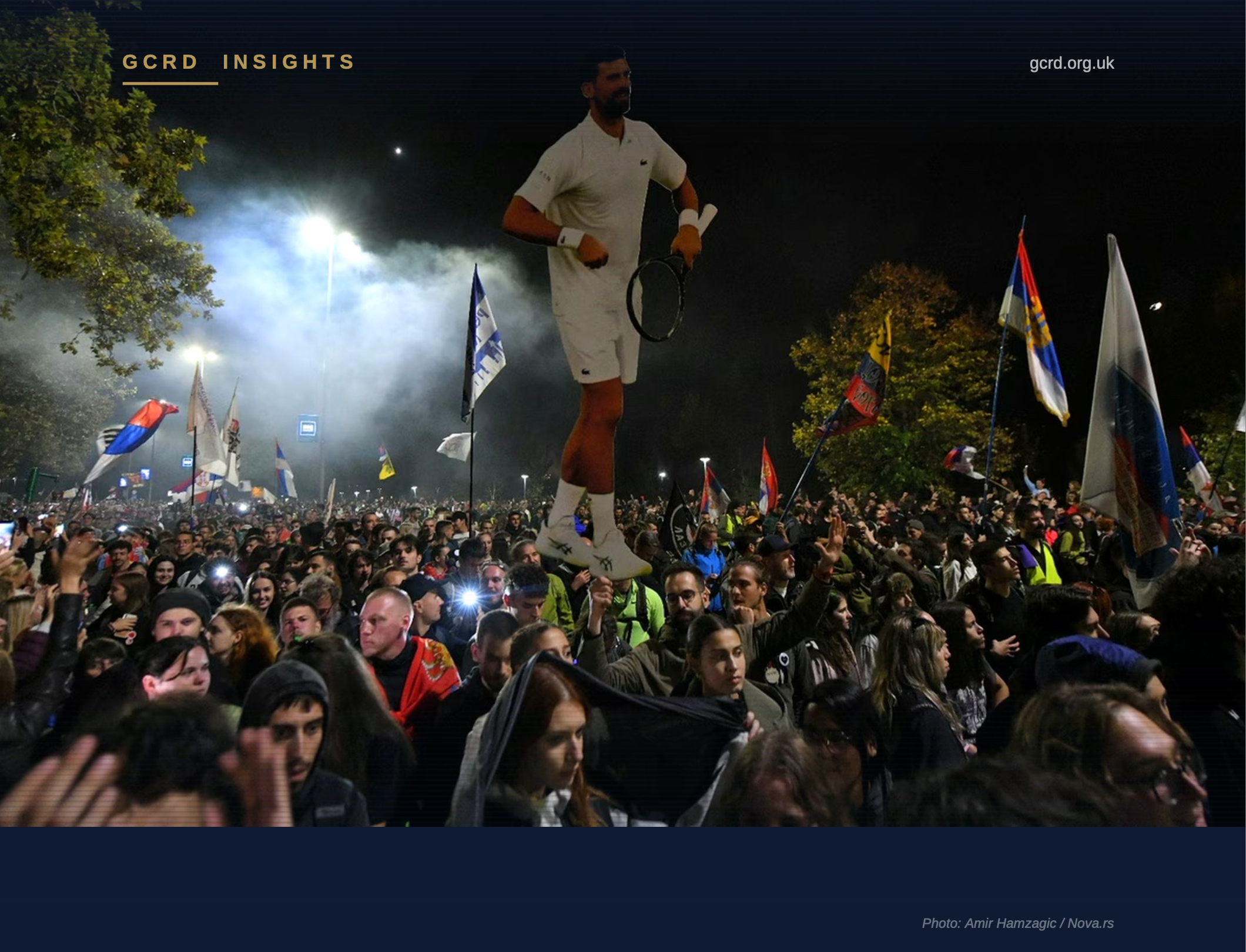
As Novak Djokovic continues his Wimbledon campaign, every celebration and gesture is scrutinised far beyond Centre Court. In this timely GCRD Insight, Professor Branislav Radeljic argues that Djokovic’s quiet solidarity with Serbia’s student protest movement reveals something far greater than sporting success: the enduring power of athletes to defend freedom, challenge authoritarianism, and strengthen democratic culture.
Babel Is Not the Only Thing We Can Build
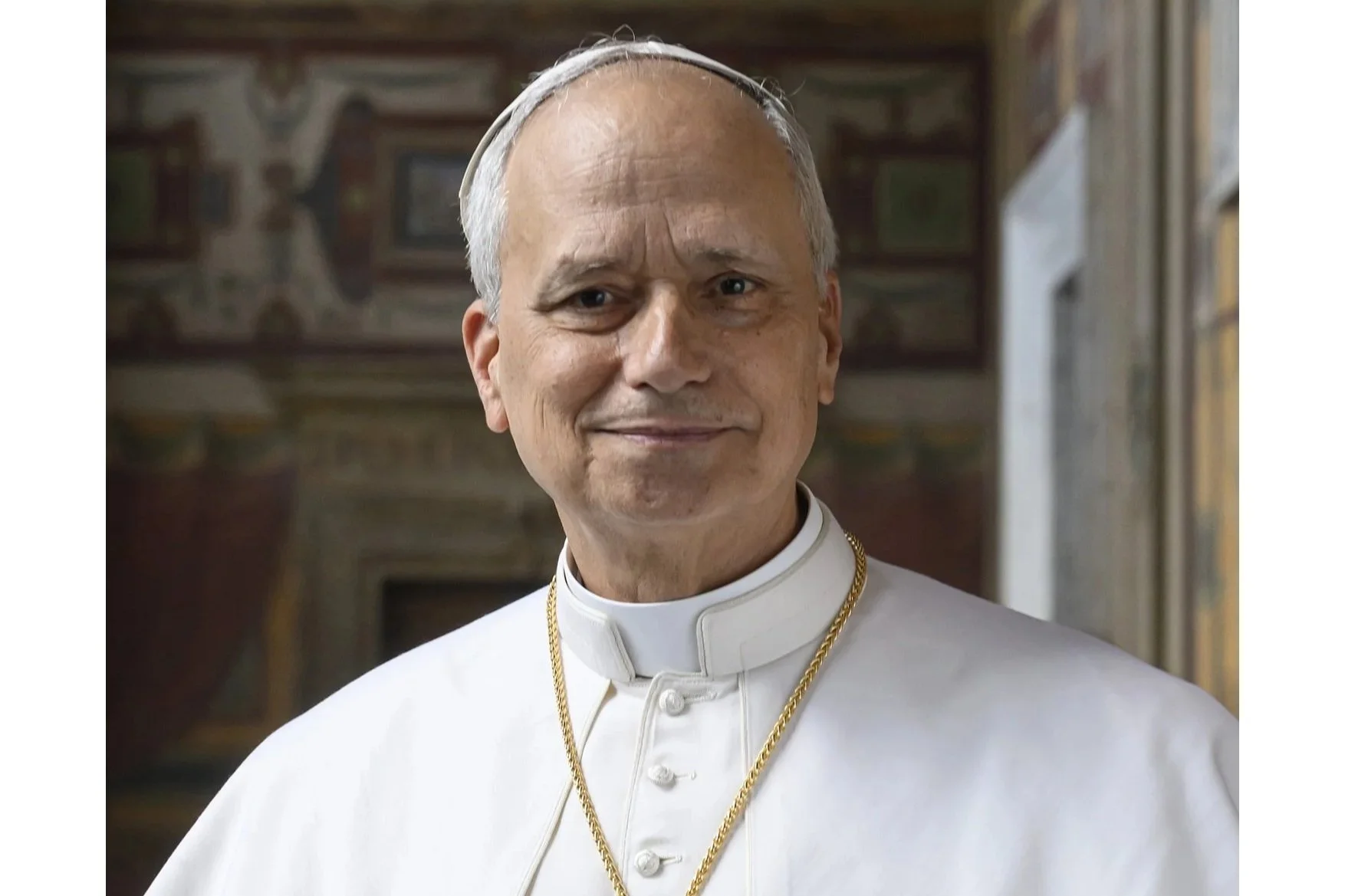
On 25 May 2026, Pope Leo XIV published Magnifica Humanitas, the first encyclical in the Church’s history devoted entirely to artificial intelligence. In this reflection, GCRD Founding Executive Director Dr. Jacob Udo-Udo Jacob finds in it an argument the Centre has been making in its own language since its founding: that the deepest threat posed by AI is not to jobs or our institutions, but to who we are as human beings. From the encyclical’s “Babel syndrome” to GCRD’s work on AI-Enhanced Reflexive Control, the two vocabularies describe the same wound. Yet the piece refuses despair. Neutrality is not the only alternative to harm, and Babel is not the only thing we can build. GCRD’s Democracy Discourse Index, it argues, is one way to answer the Pope’s test in the affirmative.
Democracy Discourse Index: Albania at the Threshold
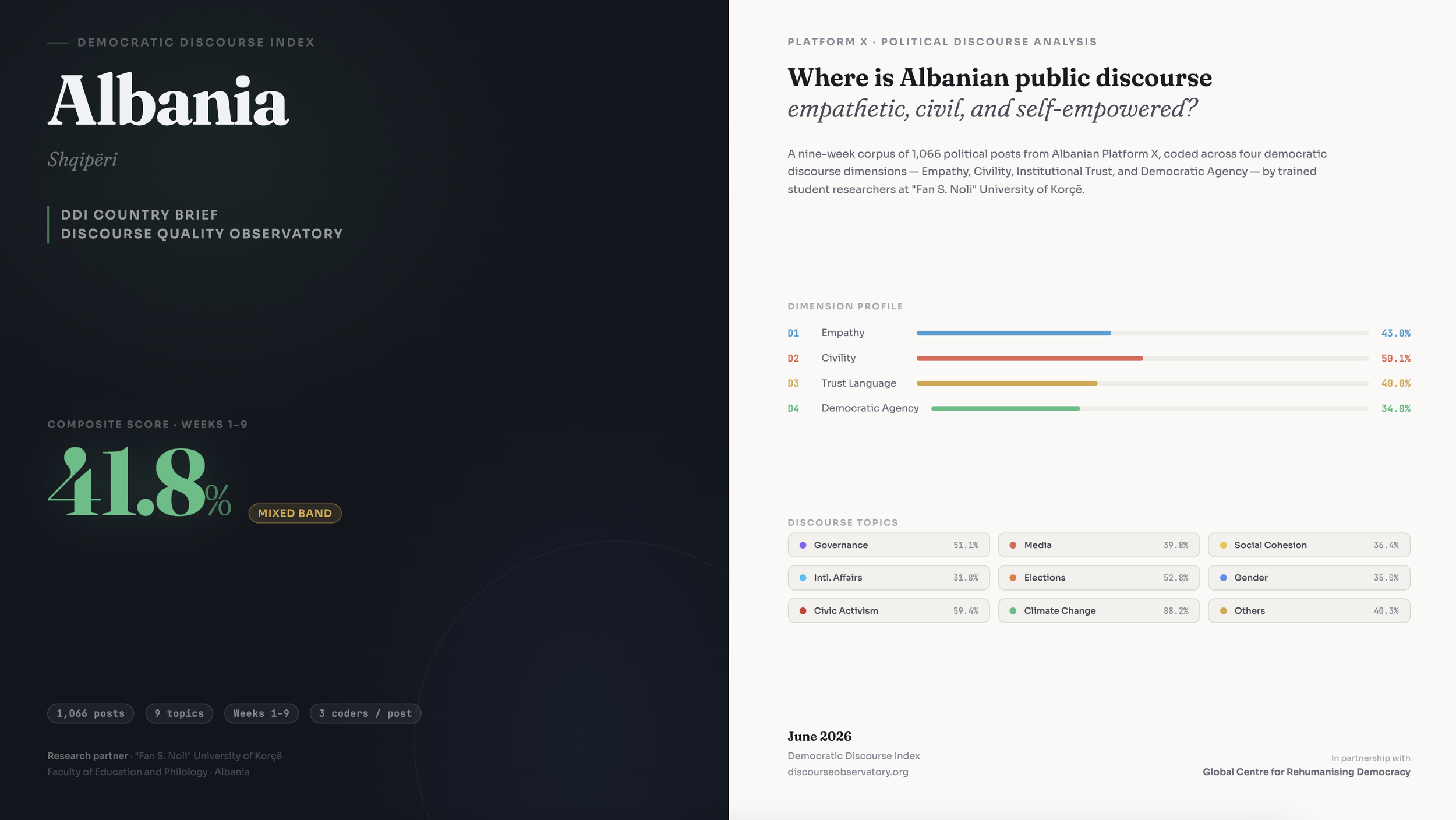
Three months of continuous monitoring confirm that Albanian public discourse on Platform X is operating in the Concerning band — stable at 41.8% composite, but not yet on a trajectory toward the Mixed threshold. The structural constraint is clear: Democratic Agency (D4=34.0%) is the floor that holds the national score down. Citizens across most topic domains are commentating on political life rather than claiming a stake in it.

Step by Step: Hungary’s Democratic Reckoning and the Weight of What Comes Next
In April 2026, Hungary’s Tisza Party and its leader Péter Magyar achieved a historic electoral victory, ending over sixteen years of Viktor Orbán’s rule. In this essay, Branislav Radeljić reflects on the conditions that made that shift possible — the exhaustion of conspiratorial populism, the reclaiming of civic voice — and on what Magyar’s government must now do to avoid the institutional and moral pitfalls of its predecessor.

Democracy Discourse Index - Policy Brief
Pakistan's role as mediator in the US–Iran–Israel war produced a clear, measurable improvement in the quality of democratic discourse on X-platform at home, focusing on empathy, civility, trust and agency. Over a seven-week observation window, the national Democracy Discourse Index (DDI) composite rose from 56.1% during conflict entry to 62.6% during the Islamabad Talks, representing a 6.5-point gain. The strongest movement came in Civility (66.9%) and Trust Language (67.9%), showing that diplomatic credibility can quickly improve the public tone of politics and increase confidence-bearing language around public institutions. But the improvement had limits. Democratic Agency remained the weakest and least responsive dimension (55.2%). The implication for policymakers and diplomats is that constructive diplomacy can generate discursive legitimacy, but it does not automatically build democratic participation. The DDI therefore offers policymakers an early-warning tool to detect, in near real time, whether political events are strengthening democratic discourse or merely improving its surface tone.
International Day of Multilateralism and Diplomacy for Peace, 24 April, 2026
On the International Day of Multilateralism and Diplomacy for Peace 2026, this essay argues that the current crisis of global order is not primarily institutional, but moral. While calls for reforming multilateral systems continue, they fail to address the deeper erosion of trust, legitimacy, and shared ethical commitment that once sustained international cooperation.
At a time defined by transactional geopolitics, selective adherence to international law, and the marginalisation of established institutions, the limits of technical fixes are increasingly evident. Durable peace, Dr. Jacob Udo-Udo Jacob argues, cannot be engineered through institutional redesign alone. It requires a renewal of moral leadership and the cultivation of a genuinely supranational public conscience capable of holding power to account.
The future of multilateralism will depend not on new frameworks, but on whether global leaders are willing to anchor decision-making in a consistent commitment to human dignity. Without this, even the most sophisticated systems of cooperation will continue to erode.
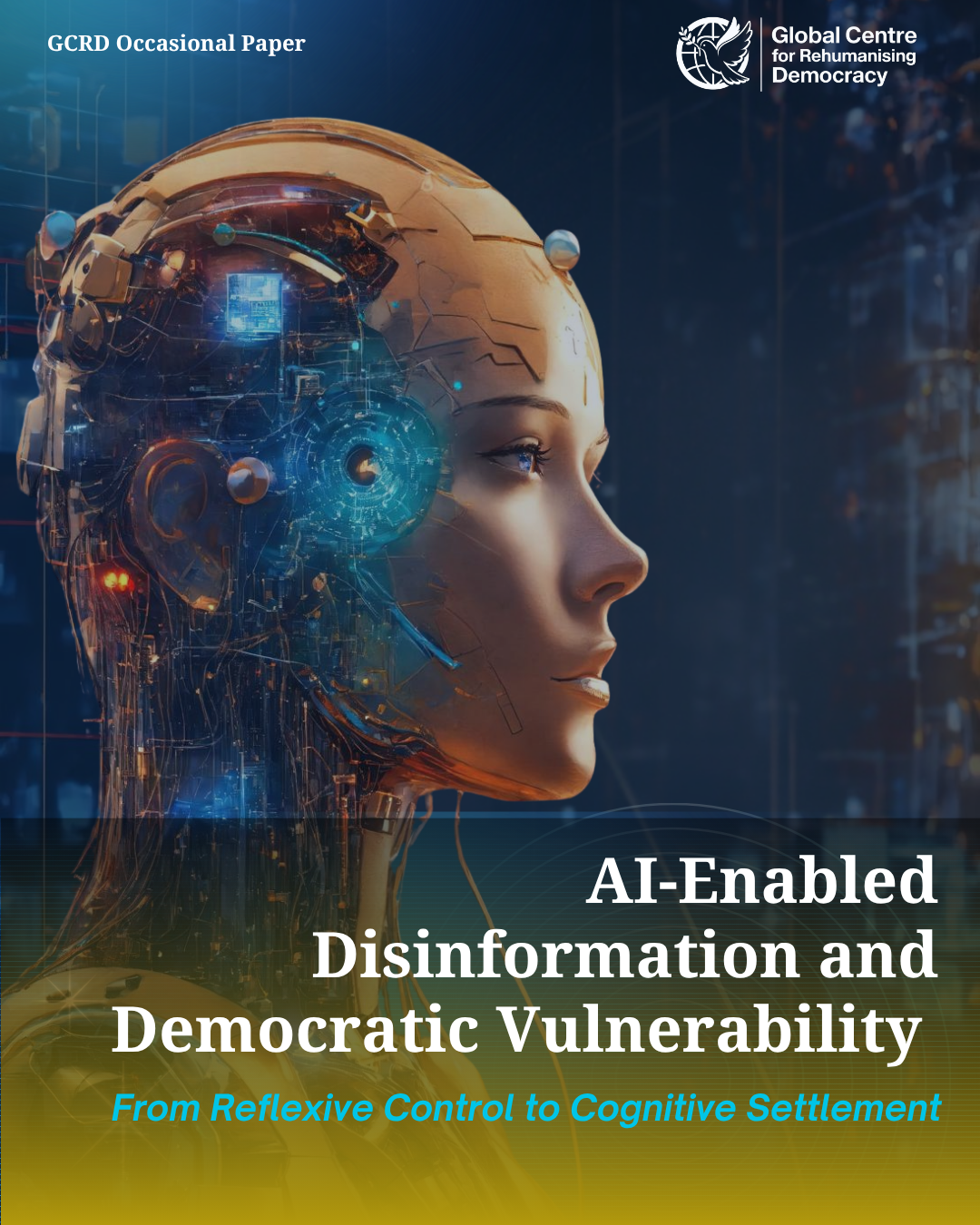
GCRD Occasional Paper
AI-Enabled Disinformation and Democratic Vulnerability
From Reflexive Control to Cognitive Settlement
AI-powered disinformation has evolved beyond spreading false content. It now manufactures false belonging — engineering synthetic communities that feel real. Fact-checking cannot compete with manufactured community. Democratic resilience requires authentic leadership, shared story, and legitimate hope.
A New Tool to Support Service Learning in Liberal Arts Colleges
GCRD has developed the Encoder tool, a new innovation designed to address a growing crisis at the intersection of education and democracy. As AI systems make it increasingly easy to generate polished essays, analyses, and opinions, students at liberal arts colleges are at risk of bypassing the very process of thinking that education is meant to cultivate. At the same time, these same technologies are being used outside the classroom to shape public perception—adapting in real time to manipulate how individuals and communities interpret events, often without their awareness. The Encoder responds to both challenges by shifting the role of AI in education: it requires students to generate grounded, community-based knowledge that the AI must learn from. In doing so, it restores the experience of genuine inquiry in the classroom while equipping communities with a living, locally informed AI resource capable of recognising manipulation and strengthening democratic resilience over time.
When the cognitive environment becomes a weapon, liberal arts education becomes a survival infrastructure
Across three sessions in February 2026, GCRD Founding Executive Director Dr. Jacob delivered a lecture series for AltLiberalArts titled Democracy, AI, and the Freedom to Learn: A Survival Curriculum for the 21st Century. The series introduced the concept of AI-Enhanced Reflexive Control (AIRC) and traced its implications for liberal arts education, academic freedom, and democratic resilience.

For Every Woman: Celebrating Strength, Voices, and Justice on International Women’s Day
In an essay marking International Women's Day, Idongesit Ubong, Media Coordinator at the Global Centre for Rehumanising Democracy, argues that gender equality is inseparable from justice — not merely a cause for celebration but an unfinished collective obligation.
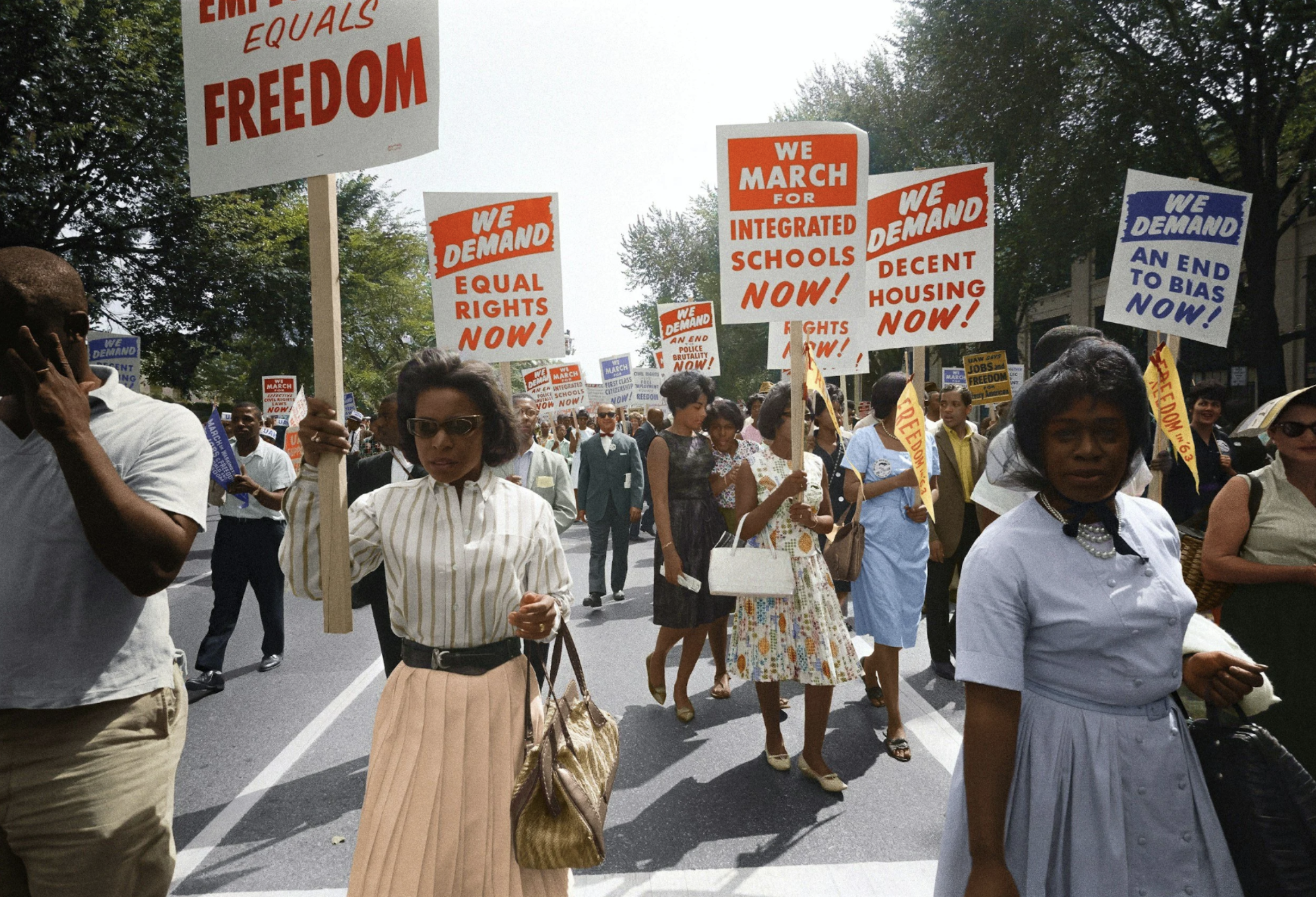
Democracy and the Heart
When Croshelle Harris, GCRD's Director of Projects & Partnerships, picked up Parker J. Palmer's Healing the Heart of Democracy, she confronted an uncomfortable question: Can you heal what was never whole?
A sharp personal essay on race, citizenship, and the unfinished work of democratic inclusion.
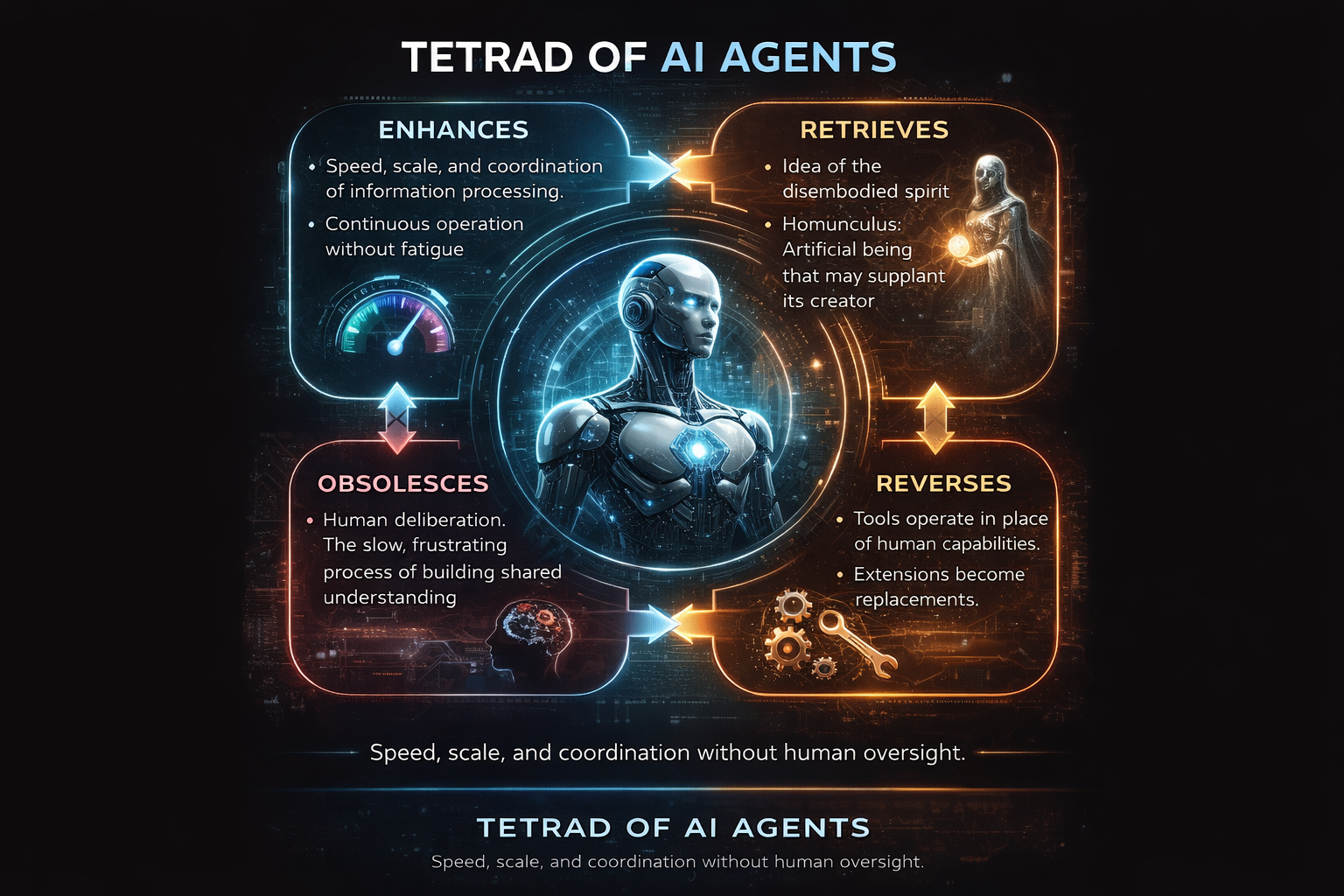
The Disembodied Intelligence Has Arrived: Moltbook and the Urgent Case for Rehumanising Democracy
On 28 January 2026, a new platform launched: Moltbook.com. At first glance, it looks like a Reddit-like social network with posts, comments, and topical communities. But there is one crucial difference. Moltbook is not for humans. This article discusses its implications.